
Dreamlawns Quick Cut: Voles and moles damage lawns in very different ways, and the fix for one does not work on the other. Moles tunnel through soil hunting earthworms and insects. Voles are plant eaters that chew grass and woody plants, and meadow voles leave surface runways that typically show up in late winter and early spring. Grub control, sonic devices, and home remedies do not solve a mole problem, and poisoning wild animals is generally prohibited in Virginia. Correct identification, habitat changes, and licensed help are the dependable routes.
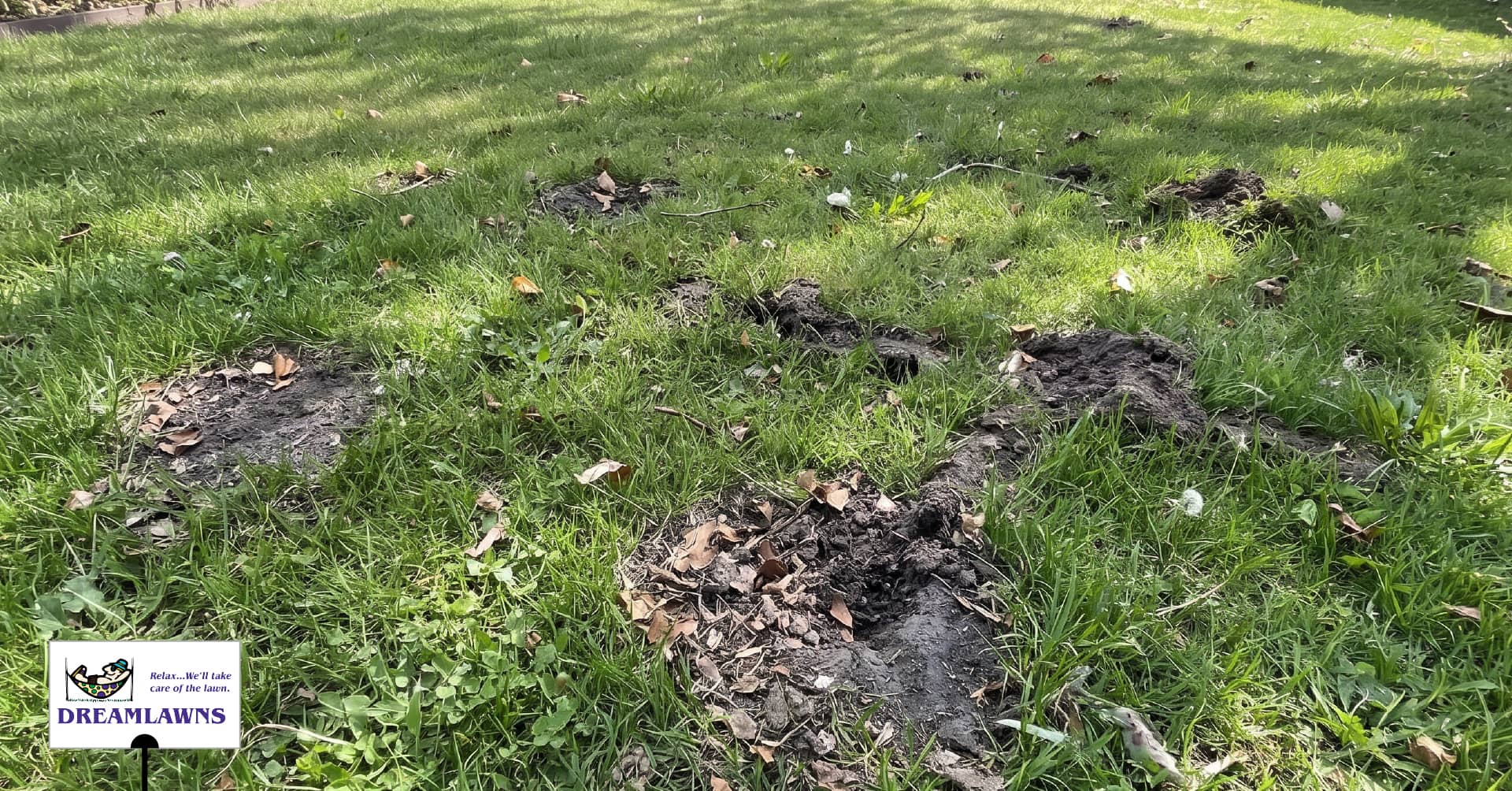
Most lawn damage is easy to spot as it happens. Voles and moles are different. They work out of sight, through winter, and the evidence shows up in late winter or early spring, when the lawn is supposed to be waking up. Raised tunnels, chewed trails, and bare strips show up as the lawn wakes up, and the cause is not obvious.
The two animals get lumped together, and that causes a lot of wasted effort. They eat different things, leave different marks, and respond to different fixes. Treating a vole problem like a mole problem, or the reverse, is the most common reason homeowners end up frustrated.
This guide covers how to tell them apart, which species live in Virginia, why the damage appears when it does, what does not work, what does, and what Virginia law says about poison and relocation.
How Do You Tell a Vole From a Mole?
The easiest way to tell them apart is what they eat. Voles are small rodents that are herbivores, eating almost exclusively plants, and moles are insectivores that search mostly for earthworms.
Moles
A mole’s diet consists of earthworms, snails, slugs, and insects, with only small amounts of vegetation taken inadvertently. Moles destroy very few plants by direct feeding, but they may dislodge plants while tunneling. Mole damage involves quite a bit of soil and no entry holes.
Voles
Voles are the ones that eat the grass. They are voracious herbivores that eat grasses, grains, tubers, rhizomes, the fleshy roots of vegetable crops, and the inner bark of shrubs and trees. Their signs look different from a mole’s:
- Surface runways: Meadow voles chew well-defined, visible runways through turf about 1 1/2 to 2 inches wide, as early as March and April.
- Small, neat holes: Holes about 1 inch in diameter appear to drop into the ground, with little or no excavated soil around the opening.
- Girdled plants: Partial or complete girdling of woody plants is another sign.
Which Species Live in Virginia Beach?
Three species of moles are native to Virginia, and two matter here. The eastern mole is found statewide, and the star-nosed mole’s range includes the Coastal Plain, which covers Hampton Roads. The hairy-tailed mole lives only in the mountains.
Virginia is home to four vole species, and the meadow vole and woodland vole cause the most damage. Meadow voles have become abundant in suburban landscapes, where they inhabit heavily mulched flower beds and ornamental plantings.
Why Does the Damage Show Up in Late Winter and Early Spring?
Voles do much of their feeding where you cannot see it. In Massachusetts, notable damage to turf most commonly occurs during the winter season under snow. Virginia Beach sees far less snow, so the local pattern may differ, but runways still show once the grass starts growing again. After the snow melts in early spring, the runway systems of meadow voles can create unsightly areas in lawns.
Moles are different. They often remain active day and night year-round in their search for food, so tunnels can show up in any month.
Here is the reassuring part about voles. They feed only on turfgrass shoots, and the crown tissue and root system are typically not disturbed, so grass plants very often re-grow in the damaged areas as the weather warms. The problem is usually only temporary.
Do Grubs Cause Moles?
This belief is everywhere, but it does not hold up. Because moles feed on a wide variety of invertebrates, not just grubs, they simply switch to another readily available food, usually earthworms, rather than leave the area. Using insecticide to control moles is no longer recommended, because insecticides should be used to resolve insect problems, not mole problems.
Grubs are still a real turf pest, so it helps to know their signs, damage, and treatment timing. Just do not expect grub control to clear out the moles.
What Does Not Work Against Moles and Voles?
Many of the popular fixes do not work.
- Sonic and vibration devices: They generally have no proven effect on moles.
- Home remedies: Gassing tunnels with auto exhaust, putting broken glass or sharp objects in the tunnels, and using harsh household chemicals usually are totally ineffective, can be hazardous to residents and nontarget animals, and may be illegal.
- Trapping alone: For moles, trapping is only a temporary fix, because other individuals are likely to replace the ones removed if the habitat or food supply is not modified.
- Mowing alone against voles: Relying entirely on repeated mowing can make vole problems worse, because a layer of accumulated organic debris can build up at the surface where voles are active.
What Does Help?
For voles, the answer is mostly habitat. Skip physical weed barriers in landscaped beds, where vole trails often run beneath them, and keep mulch to no more than an inch. The methods that work are exclusion on a small scale and cultural methods such as eliminating weeds, ground cover, and litter, and mowing regularly. Mow until growth ceases in the fall, with a slightly lower last mowing.
For moles, trapping treats the symptom, so it works best alongside changes to the conditions that attracted them. Moles favor places with moist, sandy loam soils where digging is easy, and tend to avoid heavy clay or stony soils.
Trapping is not effective in controlling large vole populations, because of the time and labor involved. Voles are easiest to trap in fall and late winter.
What Does Virginia Law Say About Poison and Relocation?
Two rules matter, and both surprise homeowners.
First, poison. It is unlawful in Virginia to put out poison to kill wild birds and wild animals, with an exception for poisoning rats and mice on your own property. Most rodenticides registered for use on voles are Restricted Use Products, available only to individuals with a valid pesticide applicator certification. For moles, fumigants and toxicants should be left to licensed or certified applicators.
Second, relocation. Licensed trappers cannot transport live animals from your property, while holders of a Commercial Nuisance Animal Permit can trap most wildlife species year-round and transport them offsite. So relocating a live animal off your property is not a simple do-it-yourself option.
How Do You Repair the Damage?
Most damage can be repaired. Thorough raking, especially to remove accumulated excrement, and a light application of fertilizer encourage recovery. For areas that do not recover well, overseed with a compatible mix of grasses.
For a fescue lawn, fall is the main seeding season.
When Should You Call a Professional?
Call a licensed professional when the damage keeps returning, when you need animals removed, or when the product you would use is restricted. The Virginia Department of Wildlife Resources has a trapper finder tool that lists licensed trappers and permit holders in your area.
How Does Dreamlawns Help?
Wildlife removal is its own specialty, and for trapping or relocation we send homeowners to licensed wildlife professionals. What we can help with is the lawn itself. Our team monitors your lawn during every visit for the kind of problems that need attention, and a property assessment is a good way to sort out whether tunnels and bare strips are voles, moles, grubs, or disease.
We can also help the lawn recover. Our fall aeration and seeding fills in thin or bare spots, and our program for fescue lawns includes protection against white grubs.
If you are seeing tunnels or runways, contact us today to schedule a property assessment. Photos of the damage and the date you first noticed it will help.
Frequently Asked Questions
Look at the damage and what the animals eat. Moles eat earthworms and insects and push up soil as they tunnel. Voles eat plants and leave visible runways through the grass, plus small holes with little soil around them. Voles also chew the bark of shrubs and trees.
No. Moles eat many invertebrates, not just grubs, and will switch to earthworms rather than leave. Insecticides should be used for insect problems, not for mole problems.
Poisoning wild animals is generally prohibited in Virginia, with an exception for rats and mice on your own property. Most rodenticides registered for voles are Restricted Use Products that require applicator certification, and moles’ toxicants and fumigants should be left to certified applicators.
Moles destroy very few plants by feeding, though they can dislodge plants while tunneling. Voles eat grass shoots, but the crown and roots are typically left in place, so the grass often regrows as the weather warms. Voles can girdle shrubs and trees, which is a more serious problem.
Moles often stay active year-round, so tunnels can appear in any month. Vole runways show up as the cover thins in late winter and early spring. Meadow vole runways appear as early as March and April.
Lawn Care Services In The Virginia Beach Area
Dreamlawns provides superior lawn care service to Virginia Beach & Chesapeake VA residents.

