


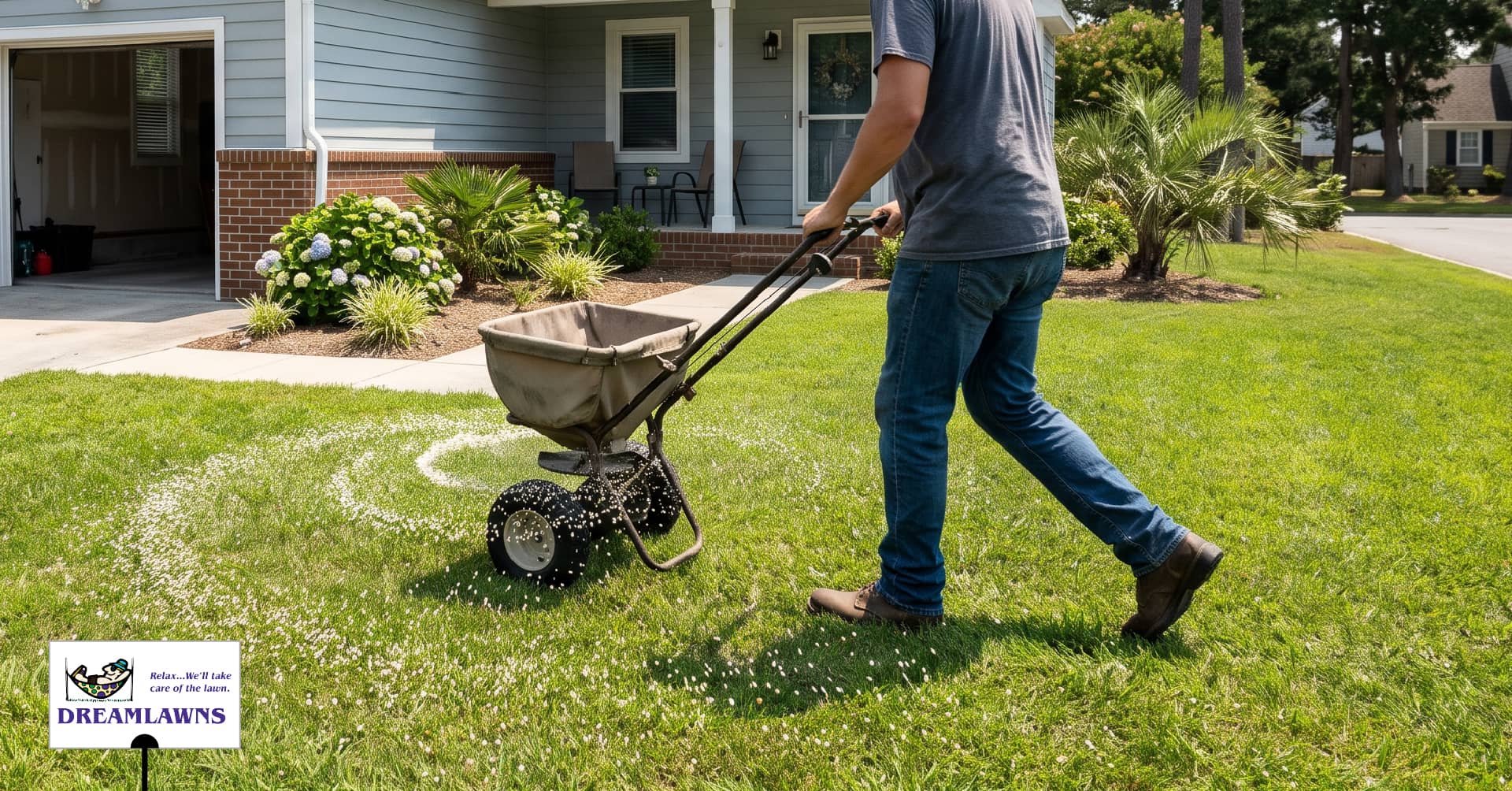
Dreamlawns Quick Cut: Potassium is the nutrient most homeowners overlook, and it matters most right after a hard summer. It strengthens cell structure, regulates water movement, and drives drought tolerance, disease resistance, and cold hardiness. Summer heat, drought, and disease draw heavily on it, and sandy coastal soils lose it easily. Fall is the right window to replenish potassium so your lawn recovers from summer and heads into winter strong. A soil test tells you whether your lawn actually needs it.
When a lawn looks tired at the end of summer, most homeowners reach for nitrogen. It’s the nutrient everyone knows, the one that greens things up fastest, and the one most lawn products lead with. But after a summer of heat, drought, and disease pressure, nitrogen often isn’t what the lawn actually needs most.
Potassium is the nutrient that tends to get overlooked, and it does some of the most important work in a stressed lawn. It doesn’t produce the dramatic color response nitrogen does, so it’s easy to ignore. What it does instead is build the plant’s ability to withstand stress, resist disease, and survive winter, which is exactly what a Virginia Beach lawn needs heading out of summer and into the colder months.
This guide covers what potassium actually does for turfgrass, why a hard summer draws down what’s available, why fall is the right time to address it, and why a soil test should drive the decision rather than guesswork.
What Does Potassium Actually Do for Your Lawn?
Potassium is one of the three primary nutrients in lawn fertilizer, the K in the N-P-K ratio on the bag. Unlike nitrogen, which drives leaf growth and color, potassium works behind the scenes on the plant’s internal machinery. It activates the enzymes used in protein, sugar, and starch production and maintains turgor pressure inside the plant, which is the internal water pressure that keeps cells firm and functioning.
That internal role translates into three benefits that matter enormously for a Virginia Beach lawn. Adequate potassium has a strong influence on drought tolerance, cold hardiness, and disease resistance. When potassium runs short, the reverse shows up as increased susceptibility to drought, winter injury, and disease.
It’s worth being straight about expectations, though. Potassium is not a miracle nutrient, and the marketing around it often runs ahead of the research. Turfgrass researchers have examined how much of potassium’s reputation as a stress protector holds up, and the honest picture is that its core functions are well established while some of the broader claims are less settled. What’s not in question is that a lawn short on potassium is measurably more vulnerable to drought, disease, and winter damage. That’s reason enough to pay attention to it.
Why Does Summer Stress Draw Down Your Lawn’s Potassium?
A hard summer works against potassium availability from both directions at once. Demand rises while supply falls, and by the time September arrives, many Virginia Beach lawns are working with less than they need.
- Stress increases demand: Heat, drought, and disease all force the plant to lean harder on the physiological processes potassium drives. A lawn fighting through a hot, dry Virginia Beach summer is drawing on potassium continuously just to manage water and withstand stress.
- Sandy coastal soils lose it: Potassium is water-soluble and moves through soil readily. In the sandy, fast-draining soils common across Hampton Roads, summer rainfall and irrigation carry it down past the root zone. Even though soils contain large amounts of potassium overall, only a small fraction is in the form plants can actually use.
- Clipping removal takes it away: Potassium is present in grass tissue at meaningful levels, so bagging clippings all summer removes it from the system instead of returning it to the soil.
- Disease pressure compounds it: A summer of fungal disease pressure both consumes plant resources and leaves damaged turf with more recovering to do in fall.
The result is a lawn entering fall with elevated needs and reduced reserves, right at the point in the year when potassium matters most for recovery and winter preparation.
What Are the Signs of Low Potassium in a Lawn?
Potassium deficiency is genuinely hard to spot, which is a big part of why it goes unaddressed. The symptoms are subtle, and they overlap heavily with other problems, especially nitrogen deficiency. Common indicators include:
- Dull, lackluster color that doesn’t improve much with feeding
- Poor recovery from heat, drought, or traffic stress
- Thinning turf without an obvious cause like disease or pests
- Higher than expected disease pressure through the season
- Winter injury or slow, patchy spring green-up in previous years
Here’s the catch: none of these signs are specific to potassium. A lawn showing them could be short on potassium, short on nitrogen, dealing with drought and heat stress, or fighting disease. Diagnosing potassium deficiency by eye is close to impossible, which is exactly why soil testing matters so much for this particular nutrient. Guessing usually means either ignoring a real deficiency or applying something the lawn doesn’t need.
Why Isn’t More Nitrogen the Answer?
When a lawn looks worn out after summer, the instinct is to feed it nitrogen. It’s the nutrient that produces a visible response, and a greener lawn feels like a fixed lawn. But for a stressed lawn heading into fall, leading with nitrogen can work against you.
Nitrogen drives top growth. Applied to a lawn that’s already stressed and short on resources, it pushes the plant to produce tender new leaf tissue at the expense of root development and carbohydrate storage it should be prioritizing. That tender growth is also more attractive to disease, which is why nitrogen applications are typically held back during active disease pressure and peak heat.
Potassium works differently. It doesn’t force growth. It builds the plant’s capacity to handle stress, hold water, resist disease, and survive cold. After a hard summer, that resilience is what the lawn is actually short on. This is the core distinction worth internalizing: lawn nutrition is not just about nitrogen, and the nutrient that produces the least dramatic visual response is often the one doing the most important structural work.
None of this means nitrogen is bad or unnecessary. Fall nitrogen has a real and valuable role for cool-season lawns, supporting recovery and root development when timed correctly. The point is that nitrogen alone is an incomplete answer, and reaching for it reflexively while ignoring potassium leaves the lawn less prepared for what winter brings.
Why Is Fall the Right Time for Potassium?
Late summer and early fall is the most valuable fertilization window of the entire year, because it promotes recovery from the drought and heat injury the lawn sustained during midsummer. It’s also the period when cool-season grasses manufacture and store the carbohydrates used for root growth, stress tolerance, and protection from winter injury.
Potassium supports both halves of that work. It helps the damaged plant recover from summer, and it strengthens the cell structure and water regulation that determine how well the lawn holds up through cold weather. Applying it while the grass is still actively growing means the plant can take it up and put it to use before growth slows, which is why timing it to the late-summer transition rather than waiting until the lawn is dormant makes a real difference.
The window itself depends on your grass type. Cool-season Fescue stays active later into fall and can use nutrients well into the season. Warm-season grasses need their feeding finished earlier so the turf hardens off before dormancy, since late applications push growth that won’t survive frost. Matching the application to the grass’s own calendar is what makes it effective.
How Do Potassium Needs Differ by Grass Type?
All four grasses common to Virginia Beach benefit from adequate potassium, but the reasoning and timing shift depending on what you’re growing.
Tall Fescue
For Fescue, fall is the season of recovery. After a summer of heat and disease thinning, potassium supports the root development and stress tolerance the lawn needs to rebuild density and carry through winter. It pairs naturally with fall aeration and overseeding, since new and recovering turf benefits from a well-supplied root zone.
Bermuda and Zoysia
For warm-season Bermuda and Zoysia, the priority is cold hardiness heading into dormancy. These grasses face a real winter test in our transition-zone climate, and potassium applied in late summer strengthens them before they go dormant. This is also why nitrogen gets cut off earlier for warm-season lawns while potassium remains useful, the two nutrients serve different purposes at that point in the season.
St. Augustine
Cold hardiness matters most of all for St. Augustine, which carries the highest winterkill risk of any common turf in Hampton Roads. Anything that improves its ability to survive a hard freeze is worth attention, and potassium’s role in cell structure and cold tolerance makes it particularly relevant for these lawns.
Why Should Soil Testing Drive Your Potassium Decisions?
Everything above comes with an important qualifier: apply potassium because your lawn needs it, not because potassium is generally beneficial. Those are different things, and the difference is what a soil test tells you.
A soil test measures what’s actually available in your soil rather than what you assume is there. Some Virginia Beach lawns are genuinely deficient and respond well to potassium. Others already have adequate levels, in which case adding more delivers no benefit, wastes money, and can contribute to nutrient imbalances that interfere with how the plant takes up other nutrients. Potassium isn’t harmful in the way over-applied nitrogen can be, but more is not automatically better.
Testing every two or three years is enough for most residential lawns. It removes the guesswork from potassium, tells you where your pH sits, flags any micronutrient issues, and turns fertilization from a guessing game into a decision based on what your specific soil actually contains. For a nutrient whose deficiency symptoms are as subtle as potassium’s, that information is the difference between addressing a real problem and treating one that doesn’t exist.
How Does Dreamlawns Approach Potassium and Fall Nutrition?
At Dreamlawns, lawn nutrition means more than nitrogen. Our fertilization program accounts for the full nutrient picture, including the potassium, calcium, silica, and micronutrients that build resilience rather than just push growth. That’s especially true during the windows when nitrogen should be held back, like peak heat and active disease pressure, where other nutrients still have valuable work to do.
We time nutrition to each grass type’s actual calendar rather than a one-size-fits-all schedule, which matters a great deal in fall when Fescue and warm-season lawns are moving in opposite directions. And we base nutrient decisions on what the soil and the lawn actually need, not on assumptions, so you’re investing in what will make a difference for your specific property. Our approach to fall fertilization is built around that same principle of feeding the lawn what the season calls for.
If your lawn came through this summer looking worn down, the fall nutrition window is the best opportunity you’ll get to turn that around before winter. Contact us today to schedule a property assessment and build a nutrition plan that gets your lawn ready for the months ahead.
Frequently Asked Questions
Potassium regulates several internal processes in the grass plant, including activating enzymes and maintaining turgor pressure, the internal water pressure that keeps cells firm. This gives it a strong influence on drought tolerance, cold hardiness, and disease resistance. Unlike nitrogen, potassium doesn’t produce a dramatic color response, so its effects are less visible. What it builds instead is the plant’s capacity to withstand stress and survive winter.
Late summer through fall is the most valuable window, because this is when the lawn is recovering from summer heat and drought injury and storing carbohydrates for winter. Apply while the grass is still actively growing so it can take up and use the nutrient. Exact timing depends on grass type. Cool-season Fescue stays active later into fall, while warm-season Bermuda, Zoysia, and St. Augustine need their feeding finished earlier so the turf hardens off before dormancy.
Yes, in the sense that excess potassium provides no additional benefit and can contribute to nutrient imbalances that interfere with how the plant takes up other nutrients. It isn’t damaging in the way over-applied nitrogen can be, but applying it to a lawn that already has adequate levels wastes money and accomplishes nothing. This is why a soil test should guide the decision. Testing every two to three years tells you whether your lawn actually needs potassium rather than leaving it to guesswork.
Lawn Care Services In The Virginia Beach Area
Dreamlawns provides superior lawn care service to Virginia Beach & Chesapeake VA residents.

