


Dreamlawns Quick Cut: Fall is the ideal time to aerate and overseed a Fescue lawn in Virginia Beach. Core aeration relieves compaction and creates the perfect seedbed, while fall’s cooling temperatures give new Fescue the conditions it needs to establish before winter. Because Fescue doesn’t spread on its own, annual fall overseeding is how you keep it thick. Plan on keeping the new seed consistently moist, and give the lawn around three weeks before you start seeing real results.
After a long, hot summer, most Fescue lawns in Virginia Beach are thinner than they were in spring. That’s not a failure on your part. It’s simply what a coastal summer does to cool-season grass. Heat, humidity, disease, and drought all take their toll, and by late summer the lawn shows it.
Fall is when you turn it around. Core aeration paired with overseeding is the single most important thing you can do for a Fescue lawn each year, and the fall window is approaching. As summer eases into fall, conditions shift in favor of new Fescue, and the lawn gets its best opportunity of the entire year to recover thickness and strength before winter.
But results depend on getting three things right: the timing, the process, and the aftercare. This guide walks through why fall aeration and overseeding matter so much for Fescue, how the process works, and what to expect once the seed is down, including the two aftercare details that make or break the whole effort.
Why Is Fall the Best Time to Aerate and Overseed Fescue?
Fall is the ideal season for Fescue aeration and overseeding because everything about the conditions works in the new grass’s favor. As summer heat fades, cooling soil and air temperatures create the environment in which cool-season Fescue germinates and establishes best. The grass is entering its most active growth period of the year, and new seedlings get several weeks of favorable weather to develop roots before winter arrives.
Fall timing also avoids the pitfalls of spring seeding. Spring-seeded Fescue has to race to establish before summer heat arrives, and it rarely develops a root system strong enough to survive its first Virginia Beach summer. Spring is also complicated by pre-emergent herbicides, which prevent seed germination and can’t be applied alongside overseeding. Fall sidesteps both problems, giving new Fescue the runway it needs. For the full picture of how Fescue behaves through the seasons, see our Virginia Beach Homeowner’s Guide to Tall Fescue.
In Virginia Beach, the aeration and overseeding window for Fescue runs roughly from mid-September through mid-October. That means now is the time to plan and schedule ahead of the window rather than scrambling once it arrives. Getting on the calendar early ensures the work happens at the optimal point in the season, when Fescue establishment conditions are at their best.
Why Does Fescue Need Aeration and Overseeding Every Year?
This is the question that surprises many Virginia Beach homeowners, so it’s worth being clear: annual fall overseeding isn’t a sign something went wrong. It’s standard maintenance built into how Fescue grows in this climate.
Fescue is a bunch-type grass, which means it grows in individual clumps and does not spread sideways to fill in bare or thin areas the way warm-season grasses like Bermuda and Zoysia do. Every blade of Fescue came from a seed. When summer heat, disease, drought, or foot traffic kills off individual plants, those spaces stay empty until new seed is introduced. There’s no natural mechanism for the lawn to repair itself.
On top of that, Virginia Beach summers reliably thin Fescue every single year. Even a well-managed Fescue lawn loses density between May and September as the season takes its toll. Annual overseeding is simply how you replace what summer removes and keep the lawn thick heading into the next year. Skip it for a couple of years and the lawn steadily thins, letting weeds move into the open space. Do it every fall, and the lawn stays dense and competitive.
What Does Core Aeration Actually Do?
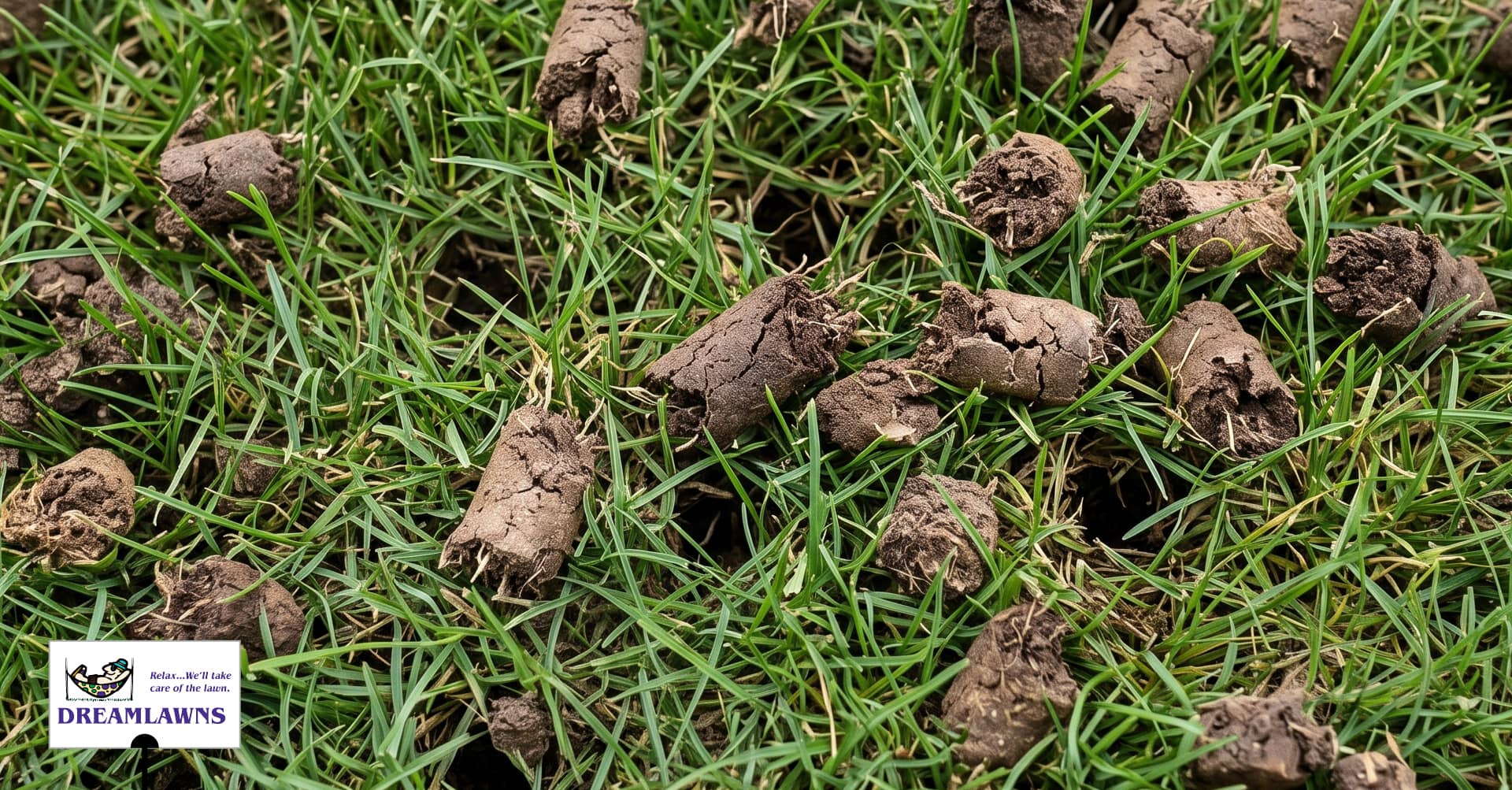
Core aeration is the process of removing thousands of small plugs of soil from the lawn, each roughly the size of a finger, using a machine designed for the job. Those plugs are left on the surface to break down naturally. What that simple-sounding process accomplishes is significant.
- Relieves compaction: Virginia Beach’s clay-heavy coastal soils compact over time, especially in high-traffic areas. Compaction squeezes out the pore space roots need, and aeration opens it back up.
- Improves air, water, and nutrient movement: The channels created by aeration let water, oxygen, and nutrients reach the root zone instead of running off or sitting on a compacted surface.
- Reduces thatch: The soil plugs introduce microbes that help break down the thatch layer that can otherwise block water and nutrients.
- Creates the ideal seedbed: This is the part that matters most for overseeding. The holes and loosened soil give new seed direct contact with the soil it needs to germinate.
It’s worth noting that core aeration, which pulls actual plugs of soil out, is far more effective than spike aeration, which just pokes holes and can worsen compaction by pressing soil outward. When it comes to preparing a Fescue lawn for overseeding, core aeration is the standard for good reason. For more on the underlying issue it addresses, see our guide on soil compaction.
How Do Aeration and Overseeding Work Together?
Aeration and overseeding are paired for a reason: each makes the other dramatically more effective. Overseeding alone, by broadcasting seed onto an established lawn, produces disappointing results because most of the seed never makes good contact with the soil. It lands on top of thatch, existing grass, and compacted ground, where germination rates are low and the seedlings that do sprout struggle to root.
Aeration solves that problem. The holes and loosened soil give seed somewhere to fall and direct contact with the soil it needs. Seed that settles into aeration holes is protected, stays moist longer, and germinates at much higher rates than seed sitting on a hard surface. The result is a thicker, more even stand of new grass from the same amount of seed.
This is why the two services are commonly done together. Aerating without overseeding misses the chance to thicken the lawn while the seedbed is perfect. Overseeding without aerating is a workable option for Fescue lawns specifically, since Fescue doesn’t typically produce significant thatch that would block seed-to-soil contact. As long as the lawn is mowed short with clippings bagged before seeding, and the new seed is properly watered, germination rates on seed-only applications are generally good. On lawns with heavy thatch, which is more common in warm-season grasses than in Fescue, germination rates drop significantly without aeration to open the seedbed. Combined aeration and overseeding remains the most effective approach for rebuilding Fescue lawn density year after year, but seed-only applications are a legitimate option when aeration isn’t practical.
Why Does the Seed Need to Stay Moist?
If there’s one aftercare detail that makes or breaks overseeding, it’s this: the new seed must stay consistently moist to germinate. This is the single most common reason overseeding fails, and it’s entirely within your control.
Once a seed begins the germination process, it cannot dry out. A seed that starts to germinate and then dries before it establishes roots will die, and no amount of watering afterward will bring it back. That means from the time the seed goes down until it germinates and establishes, the top layer of soil needs to stay damp at all times.
Importantly, this calls for a different watering pattern than an established lawn wants. A mature Fescue lawn thrives on deep, infrequent watering that trains roots to grow down. New seed is the opposite: it needs light, frequent watering, often two or three short sessions a day, to keep the surface consistently moist without washing the seed away. As the seedlings germinate and begin to establish, you gradually reduce frequency and increase depth, transitioning back toward the deep, infrequent pattern that builds strong roots. Getting this transition right is central to a successful overseeding, and it’s a big part of the aftercare guidance we provide.
How Long Until You See Results After Overseeding?
Patience is part of the process, and knowing what to expect keeps you from second-guessing a job that’s actually going fine. In general, plan on giving the lawn around three weeks, roughly 21 days, before you start seeing meaningful results from overseeding.
During those first few weeks, a lot is happening even when the surface doesn’t look dramatically different yet. Fescue seed typically begins germinating within one to two weeks under good conditions, with the tiny seedlings emerging and starting to develop their first roots. By around the three-week mark, you should see noticeable new growth filling in, though the lawn won’t be at full thickness yet. Full establishment and thickening continue well beyond that initial window.
Setting this expectation matters because impatience is what leads homeowners to make mistakes. When the lawn isn’t green in a week, the temptation is to overwater, walk the lawn to inspect it, or assume the seeding failed and give up on the watering routine, exactly the things that undermine germination. Trust the process, keep the seed moist, and give it the full three weeks before judging results. For a detailed week-by-week breakdown, see our guide on what to expect after aeration and seeding.
What Should You Do (and Avoid) After Aeration and Overseeding?
The weeks after aeration and overseeding are when the investment either pays off or falls short. Here’s what to do and what to avoid during that critical establishment period.
- Do keep the seed consistently moist: Light, frequent watering to keep the surface damp until the seed germinates, then gradually transition to deeper, less frequent watering.
- Do minimize traffic: Stay off newly seeded areas as much as possible. Foot traffic disturbs seed and compacts the freshly aerated soil.
- Do wait to mow, then use a sharp blade: Hold off mowing until the new seedlings reach the right height, and when you do mow, use a sharp blade. A dull blade tears fragile young seedlings out of the ground.
- Don’t apply any herbicide around seeding: Pre-emergents prevent seed germination, and most post-emergent herbicides also inhibit germination for weeks or even months after application. Fall weed control has to be coordinated carefully with the seeding schedule, and any herbicide application near seeding should be verified against the product label. One important note: older formulations of Roundup could be applied at or shortly before seeding without affecting germination, but the current retail formulation available to most homeowners has changed and will now inhibit seed germination. Don’t rely on the “you could use Roundup right before seeding” advice from a few years ago.
- Don’t over-fertilize: New seed benefits from appropriate starter nutrition, not a heavy nitrogen application. Aggressive fertilization can stress young seedlings.
- Don’t panic during the wait: Give the lawn the full three weeks before judging results, and keep up the watering routine the entire time.
How Does Dreamlawns Handle Fall Aeration and Overseeding?
At Dreamlawns, aeration and overseeding is one of the most important services we provide for Fescue lawns, and we treat it that way. It starts with an assessment of your lawn’s condition, soil, and thickness, so the work is matched to what your specific property needs heading into fall.
Seed quality is a detail that matters more than most homeowners realize. We use only certified Fescue seed blends tested to be free of contaminating grasses like Poa annua, which protects your investment and keeps the lawn performing as expected rather than introducing a weed problem along with the new grass. We handle the core aeration and overseeding at the right point in our seeding window, which runs from late August or early September through late October and sometimes into November depending on the weather, and we provide the aftercare guidance, especially around keeping the seed moist and knowing what to expect, that makes the difference between a lawn that fills in thick and one that disappoints.
Because the fall window is specific and fills up quickly, the best time to plan is before it arrives. Getting scheduled ahead of the season ensures your aeration and overseeding happens at the optimal time. You can also pair it with a fall fertilization program timed to support the new seed and the established lawn’s root development heading into winter.
Contact us today to schedule your fall aeration and overseeding. We’ll get your Fescue lawn on the calendar for the ideal window and set it up to come back thick.
Frequently Asked Questions
The ideal window for aerating and overseeding Fescue in Virginia Beach is roughly mid-September through mid-October. Fall’s cooling temperatures give new Fescue the conditions it needs to germinate and establish before winter, and the timing avoids the spring pitfalls of pre-emergent conflicts and summer heat. Because the window is specific and books up, it’s best to plan and schedule ahead of the season.
Plan on around three weeks, roughly 21 days, before you see meaningful results from overseeding. Fescue seed usually begins germinating within one to two weeks under good conditions, with noticeable new growth filling in by about the three-week mark. Full establishment and thickening continue beyond that. The key is patience: keep the seed moist and give it the full window before judging the results, rather than assuming it failed and stopping the watering routine early.
New grass seed needs light, frequent watering to keep the top layer of soil consistently moist, often two or three short sessions a day, until it germinates and establishes. This is different from an established lawn, which wants deep, infrequent watering. The seed cannot be allowed to dry out once germination begins, or the seedlings will die. As the new grass establishes, gradually reduce frequency and water more deeply to build strong roots.
Yes. Annual fall aeration and overseeding is standard maintenance for Fescue in Virginia Beach, not an optional extra. Fescue is a bunch-type grass that doesn’t spread to fill in bare spots, and Virginia Beach summers thin it every year through heat and disease. Overseeding each fall replaces what summer removes and keeps the lawn thick. Skipping it for even a couple of years lets the lawn thin out and allows weeds to move into the open space.
Lawn Care Services In The Virginia Beach Area
Dreamlawns provides superior lawn care service to Virginia Beach & Chesapeake VA residents.

