


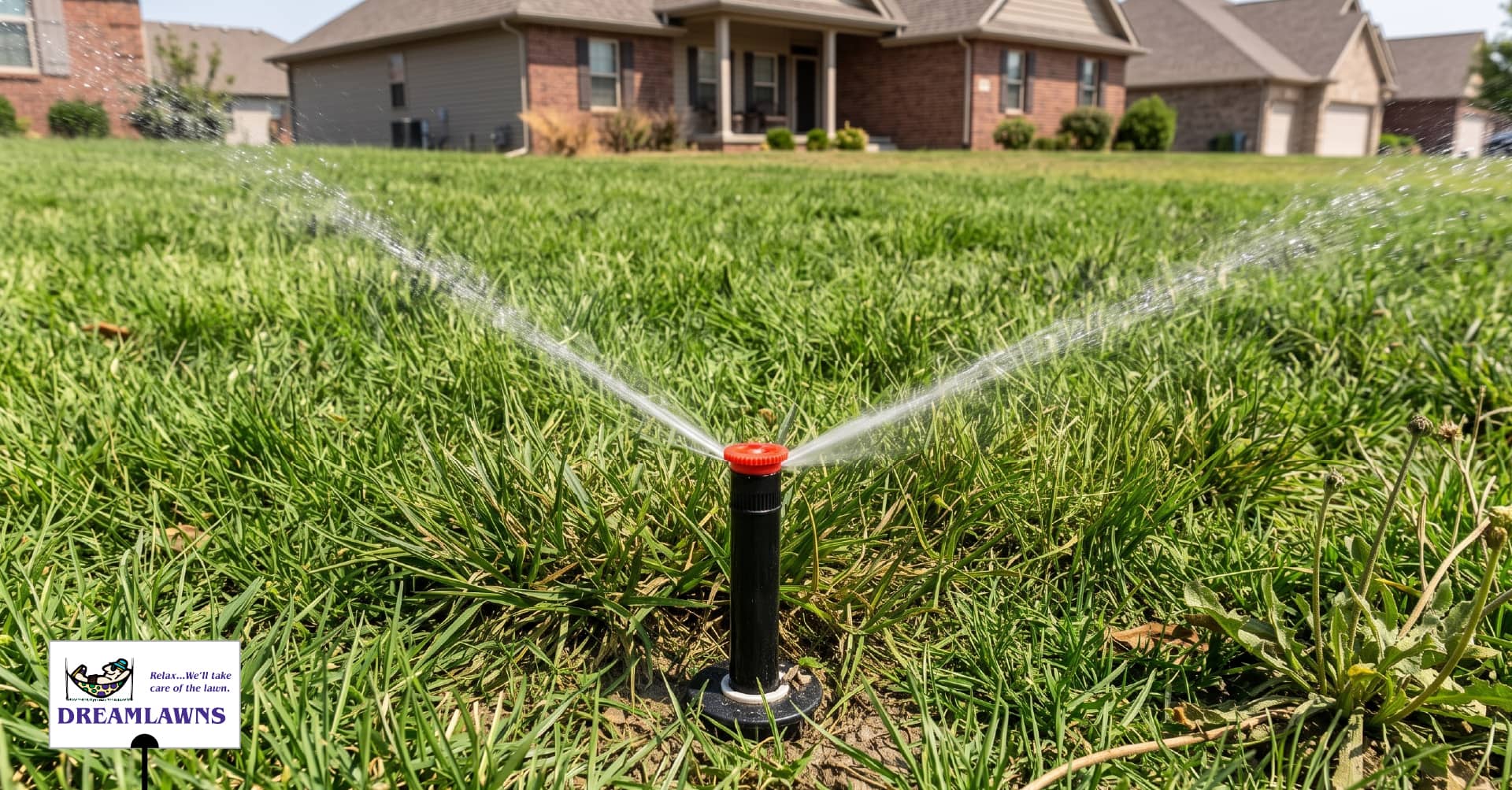
Dreamlawns Quick Cut: Virginia Beach is currently under a drought watch, and dry conditions change how you should water your lawn. During a drought, the goal shifts from a lush, green lawn to a surviving one. Water deeply but infrequently, early in the morning, and prioritize keeping the grass alive over keeping it green. Warm-season grasses like Bermuda, Zoysia, and St. Augustine handle drought far better than Fescue. Always check current Virginia Beach water restrictions before watering, since they can change.
As of this writing, Virginia Beach is under a drought watch, with much of Virginia experiencing active drought and rainfall running well below normal for the year. When water is scarce, how you water your lawn matters more than ever, both for your lawn’s survival and for responsible water use in the community.
The natural instinct during a dry spell is to water more. But drought watering is less about volume and more about strategy. Watering the wrong way during a drought wastes a precious resource, can run afoul of local conservation measures, and often doesn’t even help the lawn. Watering the right way keeps grass alive through the dry period using far less water than most people expect.
The most important shift to make during a drought is a mental one: the goal changes from keeping the lawn green to keeping it alive. This guide covers how to water your Virginia Beach lawn responsibly and effectively through drought conditions, which grasses handle drought best, and what else you can do to help your lawn survive.
What’s the Current Drought Situation in Virginia Beach?
Virginia has been dealing with significant drought conditions, with a large share of the Commonwealth under active drought and statewide precipitation running well below normal. According to the Virginia Department of Environmental Quality (August 2026), Virginia Beach and the surrounding Hampton Roads cities have been under a drought watch, the earliest of the state’s drought advisory stages, with conservation currently being encouraged on a voluntary basis rather than mandated.
Here’s the most important thing to understand: drought status and water restrictions are set at the local level and can change. Virginia has no statewide watering schedule. Each city and county decides its own conservation measures based on local water supply conditions, and those measures can be updated as conditions shift, potentially moving from voluntary to mandatory if the drought deepens. That means before you make watering decisions, check the current rules directly.
For the latest on restrictions in your area, check the Virginia DEQ drought page. These official sources will always have more current information than any blog post, and following them is both a legal and a neighborly responsibility during a drought.
Why Does Drought Change How You Should Water?
Under normal conditions, watering is about maintaining a healthy, attractive lawn. Drought conditions shift the framing but don’t necessarily change the goal. A well-tuned irrigation system with good coverage can keep many Virginia Beach lawns green through extended dry periods, with some drought stress along the way but no lasting damage. Where drought conditions do change the equation is when water becomes a limited or restricted resource, whether due to conservation measures, well capacity limits, or coverage gaps that leave portions of the lawn without adequate irrigation. In those situations, the realistic goal shifts from a fully green lawn to one that survives the dry period and bounces back when rain returns.
This shift works with the way most grasses have evolved. Warm-season grasses like Bermuda, Zoysia, and St. Augustine, along with cool-season Kentucky Bluegrass, have a built-in drought defense: dormancy. When water becomes scarce, these grasses slow growth, turn brown, and go dormant to conserve resources, then green up again once moisture returns. A dormant warm-season lawn looks dead but isn’t.
Tall Fescue, the most common managed turf in Virginia Beach, is the exception. Fescue does not have a strong natural drought defense. What looks like dormancy in a summer Fescue lawn is often actual dieback rather than a survival response, and severely drought-stressed Fescue may not recover without fall overseeding to fill in lost areas. This is why Fescue lawns need more attentive water management through dry periods than warm-season lawns do, and why “just let it go dormant” isn’t sound advice for the region’s dominant grass type.
Understanding which mechanism applies to your grass, working with dormancy where it exists and protecting Fescue more actively where it doesn’t, is the foundation of smart drought lawn care.
It’s also worth remembering that overwatering during a drought is doubly counterproductive. It wastes a scarce resource, it may violate conservation measures, and it can actually harm the lawn by encouraging shallow roots and disease. As we cover in our guide on overwatered lawns, more water is often the wrong answer even in normal conditions, and during a drought that’s truer than ever.
Should You Water at All During a Drought?
This is the question many homeowners wrestle with, and the honest answer depends heavily on your grass type. The advice that works for warm-season lawns can actively harm a Fescue lawn.
Warm-Season Lawns: Survival Watering Is Usually Enough
Established warm-season lawns like Bermuda, Zoysia, and St. Augustine can typically survive a drought with little or no supplemental water by going dormant. They aren’t dying, they’re conserving, and they’ll recover when rain returns.
If you choose to water within local restrictions, the concept to understand is survival watering. Survival watering means providing just enough moisture to keep the grass crowns, the growing points at the base of the plants, alive through the dry period. It doesn’t mean watering enough to keep the lawn green and growing. This uses far less water than normal irrigation while still protecting the lawn from dying outright during an extended drought. For a healthy, established warm-season lawn, letting it go dormant is often the most responsible choice.
Tall Fescue: Different Rules, Higher Stakes
Fescue does not have the same drought defenses as warm-season grasses, and applying the “just let it go dormant” advice to a Fescue lawn is a recipe for serious damage. Fescue that runs out of water dies rather than dormants, and once it dies, it doesn’t repair itself, since Fescue is a bunch-type grass that doesn’t spread to fill bare areas. The only recovery path is fall overseeding, which comes with its own drought problem: seed requires consistent moisture to germinate and establish. A homeowner who couldn’t water through the summer drought will likely struggle to establish new seed in the fall if drought conditions continue.
For Fescue lawns, the practical implications are:
- Prioritize water for Fescue within the limits of local restrictions, since letting it fully dry out has long-term consequences
- Focus watering on keeping the lawn alive rather than green, but recognize that a Fescue lawn needs more moisture to survive than a warm-season lawn does
- If restrictions or system limitations make adequate watering impossible, expect significant damage and plan for fall renovation
Newer Lawns and Recent Seeding
Regardless of grass type, newly seeded, sodded, or heavily damaged areas need water to survive. These lawns don’t have the root systems to fall back on and should be prioritized within whatever water is available under current restrictions.
How Should You Water Your Lawn During a Drought?
If you’re watering during a drought, within the limits of local restrictions, doing it correctly makes every drop count. The principles of good watering matter even more when water is scarce.
- Water deeply and infrequently: Deep, infrequent watering reaches the root zone and encourages deep roots that access moisture further down. Frequent shallow watering wastes water to evaporation and produces weak, shallow-rooted grass. This is the single most important watering principle, drought or not.
- Water early in the morning: Water before about 9 or 10 a.m., when temperatures are cool and evaporation is lowest, so the maximum amount of water actually reaches the soil. Many restrictions specifically require morning or evening watering for this reason.
- Practice survival watering: Aim to keep crowns alive, not to keep the lawn green. Less frequent, deeper watering that sustains the plant’s survival is the goal during drought.
- Never water in the heat of the day: Midday watering loses much of the water to evaporation before it reaches the roots, wasting a scarce resource.
- Prioritize where water goes: Focus limited water on the areas that matter most and let lower-priority sections go dormant. Trying to keep the entire lawn green during a drought spreads water too thin to help anywhere.
- Check soil moisture first: Before watering, check whether the soil is already moist below the surface. Never water ground that doesn’t need it.
- Follow current restrictions: Always stay within the watering days, times, and limits set by local conservation measures, which can change as conditions evolve.
Which Grasses Handle Drought Best in Virginia Beach?
Not all lawns respond to drought the same way. Grass type is one of the biggest factors in how well a lawn survives a dry spell, and it explains why some yards in a neighborhood stay resilient while others struggle.
Bermuda, Zoysia and St. Augustine: The Drought Champions
Warm-season grasses are far more drought-tolerant than cool-season grasses. Bermuda has the best drought tolerance of the common Virginia Beach grasses. It can enter a semi-dormant state during dry periods and recover reliably when moisture returns. Zoysia is comparable once established, combining strong drought tolerance with a dense growth habit. St. Augustine is very drought-tolerant. For homeowners with these grasses, drought is stressful but usually survivable with minimal intervention.
Fescue: More Vulnerable
Cool-season Tall Fescue is the most vulnerable to summer drought. It’s already stressed by Virginia Beach’s summer heat, and extended drought on top of that can thin or kill it, especially since Fescue doesn’t spread to repair itself.
A drought is also a good moment to think about grass type for the long term. If you’re repeatedly fighting to keep a cool-season lawn alive through dry Virginia Beach summers, a more drought-tolerant warm-season grass might be worth considering. Our guide to cool-season versus warm-season grass in Virginia Beach compares the options.
Should You Prioritize Green or Survival?
This is the heart of drought lawn care, and the answer depends on your grass type.
For warm-season lawns like Bermuda, Zoysia, and St. Augustine, chasing a green lawn during a drought is the wrong goal. A brown, dormant warm-season lawn isn’t a failed lawn. It’s a lawn doing exactly what it evolved to do to survive dry conditions, and accepting temporary brown is both the responsible choice and the better one for the lawn’s long-term health. Warm-season grasses have firm, living crowns at the base of the plants during dormancy, often with a bit of green visible right at the base even when the blades are brown. When water returns, dormant warm-season grass greens back up. Choosing survival over green in this situation conserves a scarce resource, keeps you within conservation measures, saves money, and protects the lawn from the shallow roots and disease that overwatering causes.
Tall Fescue is a different story. When Fescue turns brown during a Virginia Beach summer drought, it’s usually not going dormant, it’s dying. Fescue doesn’t have the same dormancy mechanism warm-season grasses rely on, and by the time significant browning appears, the plants are often past the point of recovery. This is why the “brown but not dead” reassurance doesn’t apply to most Fescue drought damage. The priority for Fescue during drought is preventing that damage from happening in the first place through timely, adequate watering within whatever restrictions are in place, not accepting brown as a survival state that will reverse when rain returns.
Knowing whether your grass type has a survival response or not is what separates smart drought management from wishful thinking. It’s also why accurately identifying different lawn stresses matters. Assuming a browning Fescue lawn will bounce back like a dormant Bermuda lawn wastes the window when action could still make a difference.
What Else Can You Do to Help Your Lawn Through a Drought?
Watering is only part of drought lawn care. Several other practices help your lawn conserve moisture and withstand dry conditions with less water.
- Mow higher: Raising your mowing height lets the grass shade its own soil, reducing evaporation and keeping roots cooler. Never scalp a lawn during a drought, as short grass loses moisture far faster.
- Mow less often, with a sharp blade: Mowing stresses grass, so mow less frequently during drought, and use a sharp blade to make a clean cut that the plant recovers from more easily.
- Reduce foot traffic: Stressed and dormant turf is more easily damaged by traffic. Keep activity off drought-stressed areas as much as possible.
- Adjust the nutrient approach: Don’t apply nitrogen during severe drought stress, since nitrogen pushes growth the lawn can’t support without water. That said, “fertilization” isn’t a single decision. Other nutrients still have a role during drought. Dreamlawns’ Summer StressGuard application, for example, uses potassium and silica to help plants resist water loss and better endure drought conditions. For cool-season lawns, nitrogen use is already minimal through the summer months. For warm-season lawns, standard high-nitrogen applications typically continue unless drought stress becomes severe. Skipping scheduled applications entirely because of a dry stretch usually causes more harm than good.
- Address compaction: Compacted soil sheds water instead of absorbing it. Relieving soil compaction helps what little water you do apply actually soak in and reach the roots.
- Leave the clippings: Grass clippings left on the lawn help retain soil moisture and return nutrients, a small but real help during dry conditions.
How Does Dreamlawns Help Your Lawn Through Drought Conditions?
At Dreamlawns, helping your lawn through a drought is about strategy, not just more water. We help Virginia Beach homeowners make smart, responsible decisions based on their specific grass type, lawn health, and the current conservation conditions, so the lawn survives the dry period without wasting a scarce resource.
That means grass-type-specific guidance on whether and how to water, help distinguishing drought stress from disease and other problems that call for different responses, and improvements like compaction relief that make every drop of water more effective. Just as importantly, we focus on building resilient, deeply rooted turf over time, because a healthy lawn with a strong root system withstands drought far better than a stressed, shallow-rooted one. The best drought protection is a lawn that was well cared for before the drought arrived.
We also believe in responsible water use. Our guidance always works within local conservation measures, because getting a lawn through a drought and being a good steward of community water resources are not in conflict. Explore our full range of lawn care services to see how we build lawns that hold up to Virginia Beach’s challenging conditions.
Contact us today to schedule a property assessment. We’ll evaluate your lawn’s health and grass type and help you make the right watering decisions for the current conditions.
Frequently Asked Questions
It depends on your grass type, your lawn’s health, and current restrictions. Many established, healthy lawns can survive a drought by going dormant, requiring little or no supplemental water. If you do water, within the limits of local conservation measures, practice survival watering: deep, infrequent watering that keeps grass crowns alive rather than keeping the lawn green. Always check current rules first with the City of Virginia Beach, since restrictions can change as drought conditions evolve.
During a drought, water deeply but infrequently, and only as often as needed to keep grass crowns alive, which is far less than normal irrigation. For survival watering, this often means a deep watering roughly every one to two weeks rather than multiple times a week, always early in the morning to minimize evaporation. The exact frequency depends on your grass type, soil, and local restrictions. The goal is survival, not a green lawn, so err toward less frequent watering and let the lawn go dormant if needed.
In most cases, no. Established lawns respond to drought by going dormant, turning brown and slowing growth to conserve resources, but the crowns stay alive and the grass greens back up when rain returns. A dormant lawn looks dead but isn’t. Drought-tolerant warm-season grasses like Bermuda and Zoysia are especially resilient. Cool-season Fescue is more vulnerable and can thin or die in extended drought, but even it can often survive a dormancy period.
As of this writing, Virginia Beach has been under a drought watch with voluntary water conservation encouraged, but this can change. Virginia sets water restrictions at the local level, and conditions are reviewed regularly, so measures can shift from voluntary to mandatory if the drought deepens. Always check the Virginia DEQ drought page for the current, official status before making watering decisions, as these sources are always more up to date than any blog post.
Lawn Care Services In The Virginia Beach Area
Dreamlawns provides superior lawn care service to Virginia Beach & Chesapeake VA residents.

