


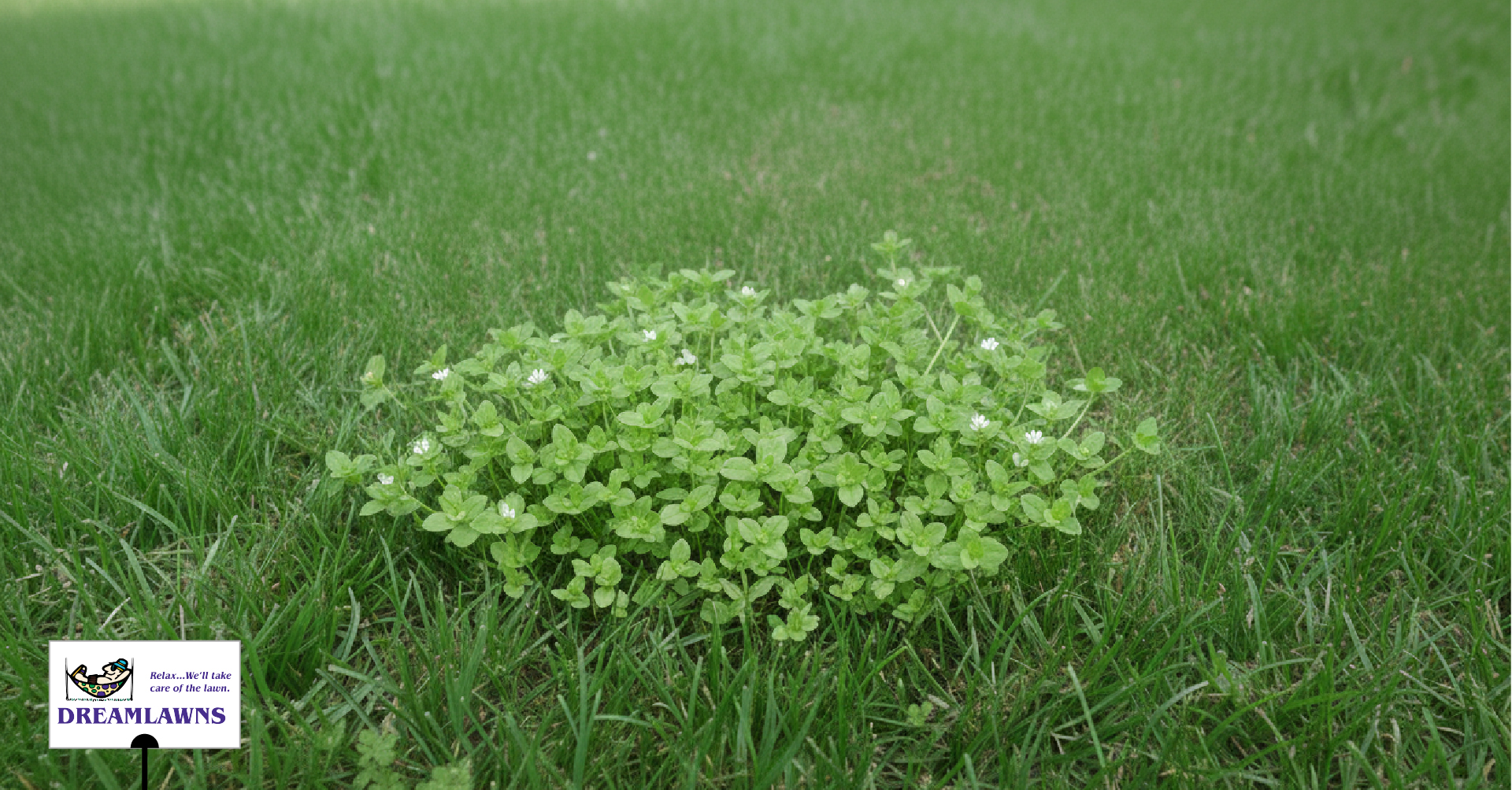
Dreamlawns Quick Cut: Chickweed spreads quickly in Virginia Beach lawns due to mild winters, frequent rainfall, and slow turf growth. It often germinates in the fall and becomes visible in winter, forming dense mats that compete with grass and weaken turf. Managing chickweed early, along with other winter weeds and underlying lawn issues, helps protect lawn density and supports healthier spring recovery.
Why Chickweed Is One of the Most Frustrating Winter Weeds
Chickweed is one of the first weeds homeowners notice during winter, and often one of the most frustrating. It seems to appear almost overnight, spreading quickly across visible areas of the lawn while turf growth is slowed by cooler temperatures. In Virginia Beach, chickweed is especially common due to mild winters and frequent rainfall.
Many homeowners assume chickweed is a sign of poor lawn care, but this weed thrives because of seasonal conditions rather than neglect. Chickweed typically begins germinating in fall, establishing itself quietly before most people realize it is present. By the time it becomes visible in winter, it is already well rooted and spreading.
Because chickweed grows low to the ground and forms dense mats, it can be difficult to control once established. Left unmanaged, it competes aggressively with turf and often leaves behind thin or bare areas when it dies off in warmer weather.
Understanding why chickweed spreads so easily is the first step toward managing it effectively. With the right approach and proper timing, chickweed can be controlled without compromising long-term lawn health.
What Is Chickweed?
Chickweed is a cool-season annual weed that thrives during fall, winter, and early spring. It is easily recognizable by its small, oval-shaped leaves and low-growing habit. Unlike many weeds that grow upright, chickweed spreads outward along the ground, forming dense mats that quickly cover open areas of the lawn.
This weed typically begins germinating in fall when soil temperatures are still moderate. Once established, chickweed continues growing through winter whenever conditions allow. Its ability to tolerate cool temperatures gives it a major advantage while turf growth slows.
Chickweed spreads both by seed and by rooting at stem nodes, which allows it to expand rapidly across thin or stressed areas of turf. Because it stays low, it often escapes mowing and can go unnoticed until it has already covered a large portion of the lawn.
Chickweed completes most of its life cycle before summer arrives. As temperatures rise, it begins to die off, often leaving behind bare or weakened areas where turf struggled to compete. These openings can then become prime spots for summer weeds if not properly addressed.
Why Chickweed Thrives in Virginia Beach
Chickweed is particularly well-suited to the climate and lawn conditions found in Virginia Beach. Mild winters (even though this Winter doesn’t feel like it), frequent rainfall, and slower turf growth create an environment where this weed can establish and spread with very little resistance.
One of the biggest factors is winter weather. Unlike colder regions where freezing temperatures limit weed growth, Virginia Beach often experiences extended periods of cool but workable conditions. Chickweed continues growing whenever temperatures allow, giving it a head start while turf growth remains slowed.
Moisture also plays a major role. Winter rainfall keeps the soil consistently damp, which chickweed prefers. Lawns with poor drainage or low-lying areas tend to see the most severe infestations, as excess moisture creates ideal conditions for rapid spread.
Thin or stressed turf further contributes to the problem. Lawns weakened by summer heat, disease, compaction, or missed fall care provide open space for chickweed to establish. Once rooted, chickweed quickly fills these gaps, forming dense mats that crowd out grass.
Shaded areas are another common hotspot. Reduced sunlight slows turf recovery even more, allowing chickweed to thrive where grass struggles to compete. These areas often show the earliest and most aggressive growth.
Together, these factors make Virginia Beach lawns especially vulnerable to chickweed during winter and early spring. Recognizing why chickweed thrives helps homeowners understand that control depends on timing and conditions, not just treatment choice.
Why Chickweed Is So Hard to Control Once It Appears
Chickweed is difficult to control, not because treatments are ineffective, but because the weed is usually well established by the time it becomes visible. In Virginia Beach lawns, seasonal conditions allow chickweed to gain a head start before homeowners realize there is a problem. Several factors contribute to how aggressively chickweed spreads once it appears:
Early germination in fall: Chickweed typically begins growing in fall, long before winter arrives. By the time it is noticeable, it already has a developed root system.
Dense, mat-forming growth habit: Chickweed grows outward along the soil surface, forming thick mats that smother turf and block sunlight.
Slow turf growth during winter: Lawns grow more slowly in winter, which limits their ability to compete and recover.
Moist, cool conditions: Chickweed thrives in the same winter conditions that stress turf, especially in areas with poor drainage or frequent rainfall.
Shallow but aggressive rooting: While chickweed roots are shallow, they spread quickly and anchor the plant firmly, making complete removal difficult.
Because chickweed establishes so early, reactive treatments often provide only short-term results. Without addressing timing and underlying conditions, chickweed can return year after year.
How Chickweed Impacts Lawn Health
Chickweed is more than just a visual nuisance. When it spreads across a lawn during winter and early spring, it creates conditions that weaken turf and make recovery more difficult once the growing season begins.
One of the biggest issues is competition. Chickweed actively competes with grass for nutrients, moisture, and space at a time when turf growth is already slowed. This puts grass at a disadvantage and limits its ability to maintain density through winter.
Chickweed also smothers turf by forming dense mats across the soil surface. This growth pattern blocks sunlight and restricts airflow, which interferes with photosynthesis and creates excess moisture near the grass crowns.
Common lawn health issues caused by chickweed include:
- Thinning turf due to reduced access to nutrients and light
- Weak root development as grass struggles to compete
- Uneven spring green-up when affected areas lag behind
- Bare or patchy spots after chickweed dies off in warmer weather
As chickweed completes its life cycle and dies in late spring, it often leaves behind exposed soil. These open areas become prime targets for summer weeds and can require additional corrective care.
Managing chickweed early helps preserve turf density through winter and supports a smoother transition into spring. Preventing chickweed from dominating the lawn reduces stress on the turf and limits long-term damage that can carry into the growing season.
Chickweed Control for Fescue vs. Warm-Season Lawns
Effective chickweed control depends heavily on turf type. In Virginia Beach, lawns are typically either cool-season fescue or warm-season grasses, and each requires a different approach during winter and early spring.
Fescue Lawns
Fescue remains active during winter, even though growth slows. Because the turf is still growing, control strategies must protect the grass while managing chickweed. For fescue lawns, chickweed management focuses on:
- Selective winter weed suppression that targets chickweed without harming turf
- Maintaining proper mowing height to help grass compete
- Managing moisture to avoid creating ideal conditions for weed spread
Pre-emergent herbicides are generally not used on fescue during winter, as they can interfere with healthy turf growth. Instead, targeted treatments and cultural practices help keep chickweed under control while preserving lawn density.
Warm-Season Lawns
Warm-season grasses such as Bermuda and Zoysia are dormant during winter, which makes chickweed more noticeable and harder to compete with. Chickweed control for warm-season lawns relies on:
- Properly timed fall pre-emergent applications to prevent chickweed germination
- Monitoring during winter for breakthrough weeds
- Spot treatments when appropriate to reduce the spread
Once chickweed is established in dormant turf, control options become limited. This is why prevention through correct timing is critical for warm-season lawns in Virginia Beach.
Using turf-specific strategies ensures chickweed is managed effectively without creating additional stress on the lawn. Matching treatments to grass type is key to reducing recurrence and supporting healthier turf long term.
How Dreamlawns Manages Chickweed and Other Winter Lawn Issues
At Dreamlawns, chickweed is rarely treated as an isolated problem. In most Virginia Beach lawns, chickweed appears alongside other winter weeds and underlying issues that weaken turf during cooler months. Effective control requires addressing the full picture, not just what is visible on the surface.
We start with a thorough evaluation of the lawn to identify contributing factors such as turf type, moisture levels, drainage, compaction, shade, and overall lawn density. Chickweed often thrives where turf is already stressed, and those same conditions commonly support other winter weeds like henbit, purple deadnettle, bittercress, and annual bluegrass.
For fescue lawns, our winter approach focuses on selective weed suppression that targets chickweed and other cool-season weeds without disrupting active turf growth. These treatments help reduce weed pressure while allowing fescue to continue competing naturally. We also evaluate mowing practices and moisture management, which play a major role in winter weed activity.
For warm-season lawns, winter weed issues are often tied to missed or mistimed prevention. Our programs emphasize properly timed pre-emergent applications, typically applied in fall, to prevent a wide range of winter weeds from establishing. During winter, we monitor lawns for breakthrough weeds and identify areas where drainage or compaction may be contributing to recurring problems.
Beyond weed control, we address common winter lawn stressors that allow weeds to return year after year. Excess moisture, poor airflow, compacted soil, and thin turf all reduce the lawn’s ability to compete. By incorporating weed management into a year-round lawn care program, we help strengthen turf, improve resilience, and reduce future weed pressure.
Our goal is not just to control chickweed or other winter weeds temporarily, but to correct the conditions that allow them to thrive. This integrated approach leads to healthier lawns that perform more consistently from winter through the growing season.
Protect Your Lawn From Chickweed and Other Cool-Season Threats
Chickweed and other winter weeds can be frustrating, especially when they seem to spread faster than the lawn can recover. Because these issues often develop months before they are visible, effective control depends on proper timing and a clear understanding of what your lawn needs.
At Dreamlawns, we help Virginia Beach homeowners take a proactive approach to winter weed management and overall lawn health. Our team evaluates turf type, soil conditions, moisture levels, and seasonal stress factors to determine why weeds are thriving and how to address them without compromising turf growth.
By integrating winter weed control into a year-round lawn care program, we help reduce recurring weed problems, strengthen turf density, and create a smoother transition into spring. Rather than relying on short-term fixes, our approach focuses on long-term results and healthier lawns season after season.
If chickweed or other winter weeds are taking over your lawn, Dreamlawns is here to help. Contact us to schedule an evaluation and start building a plan that keeps your lawn strong, resilient, and weed-resistant throughout the year.
Dreamlawns provides superior lawn care service to Virginia Beach & Chesapeake VA residents.

