


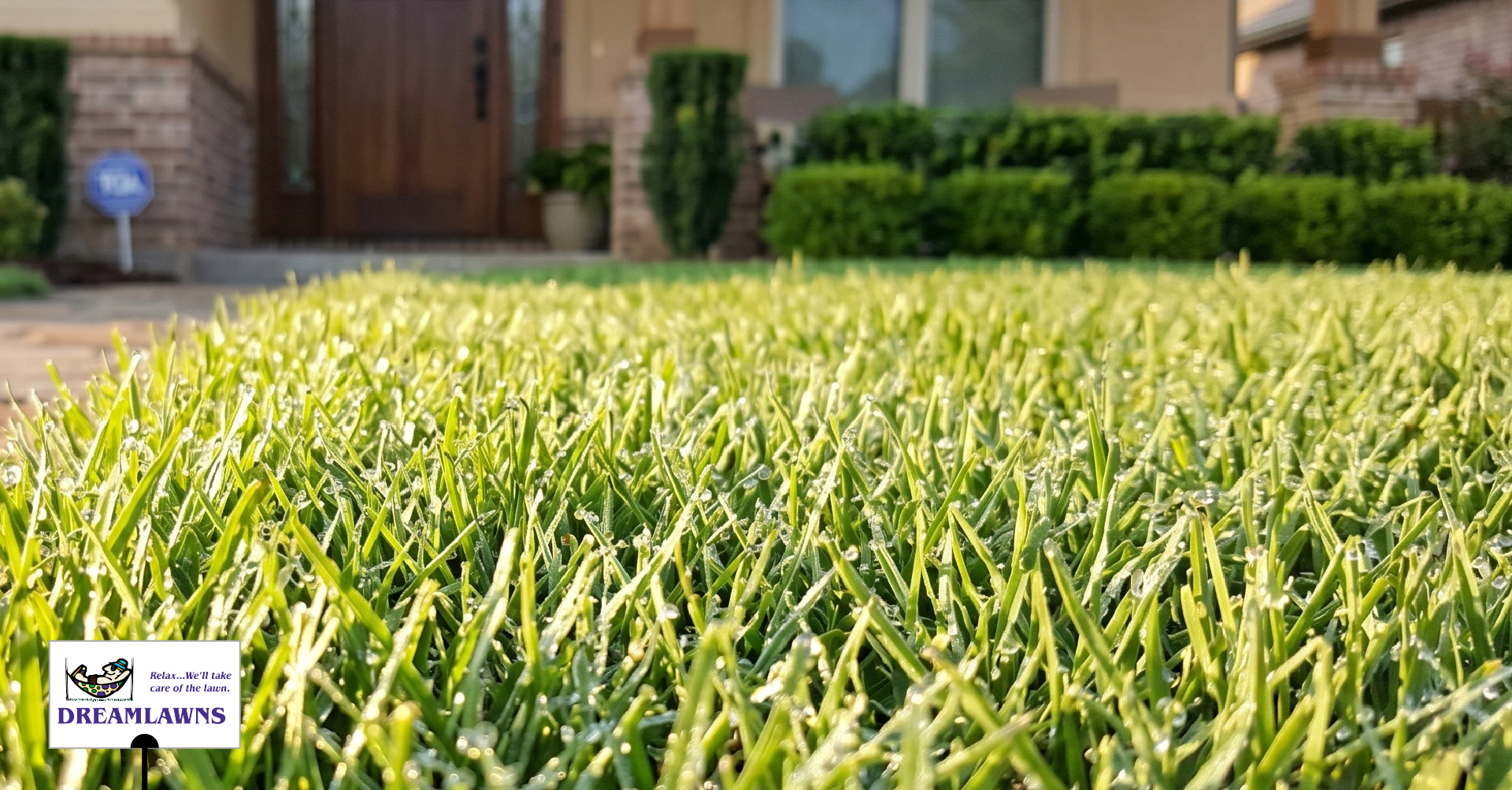
Dreamlawns Quick Cut: Bermudagrass is the most heat-tolerant and traffic-resistant warm-season grass available in Virginia Beach. It spreads aggressively, recovers fast from damage, and thrives in full sun. But it goes completely dormant and turns brown in winter, it won’t survive in shade, and it has one disease, spring dead spot, that catches most homeowners completely off guard. This guide covers everything Bermuda homeowners in Virginia Beach need to know to manage it well through every season.
Bermudagrass is the most aggressive warm-season grass in the Virginia Beach area. It grows fast, spreads in every direction through both above-ground stolons and below-ground rhizomes, and bounces back from damage that would permanently scar a Fescue lawn. For homeowners with full-sun properties, active families, or a preference for a tight, dense turf, it’s often the strongest choice available.
But Bermuda’s strengths come with real trade-offs. It goes fully dormant and turns brown at the first significant frost, which means four to five months of brown turf every winter. It cannot tolerate shade and will thin and die under tree canopies, where St. Augustine or Fescue would still perform. And it has a disease called spring dead spot that causes dead circular patches to appear as the lawn greens up in spring, a problem that most homeowners blame on winter kill and never correctly diagnose or treat.
This guide covers everything you need to know about Bermudagrass in Virginia Beach: how it grows, how to manage it through every season, and the specific threats that trip up Bermuda homeowners year after year. Whether you’re maintaining an established lawn or deciding whether Bermuda is the right grass for your property, this is your complete reference.
What Is Bermudagrass and Why Does It Work in Virginia Beach?
Bermudagrass (Cynodon dactylon) is a warm-season grass native to Africa that has become the dominant turf grass across the American South, the transition zone, and warm coastal regions. Virginia Beach sits within its reliable growing range, and the combination of hot summers, mild winters, and sandy and clay-rich coastal soils suits it well. Unlike St. Augustine, which sits at the northern edge of its range here, Bermuda is fully at home in Hampton Roads.
Several characteristics make Bermuda a strong performer in Virginia Beach. Its dual spread mechanism, above-ground stolons and below-ground rhizomes, makes it more aggressive and more self-repairing than St. Augustine, which spreads only by stolons. It has exceptional heat tolerance and one of the best drought tolerances of any common lawn grass, allowing it to go semi-dormant during extended dry spells and recover when moisture returns. And its dense, tight growth habit in full sun makes it naturally competitive against weeds during the growing season.
The most common Bermuda varieties in Virginia Beach residential lawns are common Bermuda, which is widely available and relatively coarse-textured, and hybrid varieties like Tifway 419 and TifTuf, which are finer-textured, denser, and more drought-tolerant but require more precise management. Latitude 36 is another hybrid worth knowing for its improved cold hardiness, which matters at the northern end of Bermuda’s range. Most homeowners in Virginia Beach have common Bermuda or Tifway 419. If you’re not sure which variety you have, the texture and density of the leaf blade are the most reliable visual indicators.
What Are the Biggest Challenges of Growing Bermudagrass in Virginia Beach?
Bermuda is resilient, but it has specific failure points that homeowners should understand before problems develop. These are the issues that most consistently derail Bermuda lawns in the Virginia Beach area.
- Winter dormancy and browning: Bermuda goes fully dormant and turns brown once temperatures drop consistently in fall. In Virginia Beach, that typically means four to five months of brown turf from November through March. This is normal and not a sign of damage, but it’s a significant cosmetic reality that not every homeowner is prepared for when they choose Bermuda.
- Sunlight requirements: Bermuda requires direct, unfiltered sunlight to perform well. Most cultivars need 6 to 8 hours of full sun per day. In areas with less, the turf thins, weakens, and eventually dies out. Under tree canopies, on north-facing properties, or in yards with significant filtered light from mature trees, Bermuda is not the right choice, regardless of how well it’s managed.
- Aggressive spread into beds and borders: The same rhizome network that makes Bermuda a great self-repairing lawn grass also makes it an invasive nuisance in landscape beds, garden borders, and neighboring turf areas. Physical edging and consistent maintenance are required to keep it contained.
- Thatch buildup: Bermuda’s dense stolon and rhizome network produces thatch faster than almost any other grass. A thatch layer that exceeds about half an inch begins blocking water, fertilizer, and air from reaching the root zone, weakening the lawn and creating conditions favorable to pests and disease.
- Spring dead spot: Spring dead spot is a fungal disease that is the most serious and Bermuda-specific disease threat in Virginia Beach. It causes dead circular patches that appear as the lawn greens up in spring and is almost always misdiagnosed as winter kill. By the time the damage is visible, the underlying fungal infection has been active all winter. Prevention requires fall fungicide applications, not spring treatment.
- Weed invasion during dormancy: When Bermuda is brown and dormant in winter, it cannot compete with cool-season weeds. Without properly timed pre-emergent applications in fall, winter annuals like chickweed, henbit, and annual bluegrass establish freely in the dormant turf.
What Is the Right Mowing Height for Bermudagrass?
Bermuda is mowed significantly shorter than Fescue or St. Augustine, and that lower height is part of what gives it the tight, dense appearance most homeowners associate with a well-maintained Bermuda lawn. The right mowing height depends on the variety you have.
Mowing Height by Variety
- Common Bermuda: 1.5 to 2.5 inches. This is the range for most residential lawns in Virginia Beach with common Bermuda. Staying at the higher end of this range reduces scalping risk and disease pressure.
- Hybrid varieties (Tifway 419, TifTuf): Can be mowed as low as 0.5 to 1.5 inches for a golf-course-style finish, but most residential homeowners don’t need or benefit from going that low. A target of 1 to 1.5 inches suits most hybrid Bermuda lawns.
- Recommended residential target: 1.5 to 2 inches for common Bermuda, 1 to 1.5 inches for hybrids. These ranges balance aesthetics, disease resistance, and recovery capability.
The One-Third Rule
The one-third rule is particularly important for Bermuda because the consequences of removing too much blade at once are compounded by its low mowing height. If you’re mowing at 2 inches and you let the lawn grow to 4 inches between mows, cutting back to 2 inches removes exactly half the blade. That kind of scalping stresses the plant, depletes stored energy reserves, and makes the lawn temporarily more vulnerable to disease and heat. During peak summer growth, Bermuda may need mowing every five to seven days to stay within the one-third rule.
Why We Don’t Recommend Scalping Bermuda in Late Winter
Scalping Bermuda in late winter is widely promoted online as a standard practice. The idea is that cutting the lawn down to half an inch removes dead material from the previous season, improves light penetration to the crowns, and speeds green-up. In reality, scalping creates more problems than it solves and isn’t part of how Dreamlawns manages high-quality Bermuda lawns.
Scalping stresses the turf at a vulnerable transitional moment, exposes bare soil that invites weed germination, and reduces root growth at exactly the time the plant should be building reserves for the season ahead. The short-term cosmetic benefit of faster green-up isn’t worth the long-term tradeoffs in turf density, weed pressure, and root development.
The better approach is consistent mowing through winter. Hampton Roads winters often include extended warm spells where Bermuda becomes semi-dormant rather than fully dormant. Mowing during these stretches keeps the canopy in check, reduces winter weed pressure, and supports steady root development without the stress of an aggressive scalp. A lawn maintained this way greens up evenly without the recovery cost that scalped lawns absorb every spring.
Mowing Frequency
During peak growth from June through August, Bermuda in Virginia Beach can require mowing every five to seven days at the 1.5 to 2-inch target. As temperatures cool in fall and growth slows, frequency drops. The last mow before dormancy should leave the lawn at its normal height rather than cutting it short, which removes stored energy that the grass will rely on through winter.
Blade Sharpness
Given how frequently Bermuda needs mowing in summer, blade sharpness matters more here than with most grasses. A dull blade tears rather than cuts, leaving the turf with a brownish, frayed appearance and creating entry points for disease. Sharpen mower blades at least twice during the growing season, and more frequently if you’re mowing on a five-day schedule through summer.
Clippings
Return clippings to the lawn whenever possible. At a 2-inch mowing height, clippings are small enough to fall back into the canopy without clumping and contribute nitrogen and organic matter back to the soil. Only bag if you’ve let the lawn grow too long between mows, and the clippings are thick enough to mat on the surface.
How Should You Water Bermudagrass in Virginia Beach?
Bermuda has the best drought tolerance of the three common lawn grasses in Virginia Beach. It can enter a semi-dormant state during extended dry periods and recover when moisture returns, which makes it far more forgiving of missed watering than Fescue or St. Augustine. That said, consistent deep and infrequent watering during the growing season keeps it performing at its best and reduces the stress that leads to disease and pest vulnerability.
The Basic Framework
- Target 1 to 1.25 inches of water per week during the growing season, including rainfall
- Deliver in one or two deep sessions rather than daily light watering
- Water in the early morning, before 9 a.m., to reduce evaporation and minimize fungal disease risk
- Allow the soil to dry slightly between sessions. Bermuda’s drought tolerance means it performs well with slightly drier conditions than Fescue or St. Augustine requires
Bermuda’s Drought Response
When Bermuda goes into drought-induced semi-dormancy, it turns a gray-blue color, and growth slows significantly. This is a survival mechanism, not permanent damage. If drought continues, the lawn will brown, but unlike Fescue, Bermuda almost always recovers fully when moisture returns, as long as the drought hasn’t been severe enough to kill the rhizomes. For a deeper look at how to distinguish drought stress from heat stress and disease, see our guide on drought stress vs. heat stress.
Seasonal Adjustments
Summer is Bermuda’s peak water demand period, though its drought tolerance means it handles dry spells better than other grasses. Reduce irrigation frequency in fall as temperatures drop and growth slows. Once the lawn enters dormancy, turn irrigation off entirely. Dormant Bermuda needs no supplemental water in Virginia Beach’s winter climate. Running your irrigation system through dormancy is wasteful and creates the kind of wet, cold soil conditions that favor spring dead spot fungal activity.
Signs Your Watering Needs Adjusting
- Blue-gray color and footprinting: early drought stress, water soon
- Leaf blades rolling or folding lengthwise: the grass is conserving moisture
- Spongy feel underfoot after rain or irrigation: overwatering, reduce frequency
- Dollar spot appearing in dry patches: often linked to drought stress combined with low nitrogen. Water and fertilize appropriately before reaching for fungicide
What Does a Bermudagrass Fertilization Schedule Look Like in Virginia Beach?
Bermuda is a heavy nitrogen feeder compared to most lawn grasses. It grows fast, spreads aggressively, and responds visibly to consistent feeding during the growing season. A well-designed fertilization program for Bermuda in Virginia Beach runs from late spring through late summer, stops before the fall transition, and ties every application to the lawn’s active growth rather than a fixed calendar date.
When to Start: After Full Green-Up
Do not fertilize Bermuda until it has fully greened up from winter dormancy and nighttime temperatures are consistently above 55°F. In Virginia Beach, that typically means late April to early May. Fertilizing too early pushes growth before the root system is ready to support it and can increase vulnerability to late frost events, which are uncommon in Virginia Beach but not unheard of in March and early April.
The Summer Feeding Schedule
Once active growth is established, Bermuda benefits from fertilization on a four to six-week schedule through the summer months. The primary driver is nitrogen, which fuels the aggressive stolon and rhizome growth that keeps Bermuda dense and competitive. Higher nitrogen rates than St. Augustine are appropriate here because Bermuda’s faster growth rate means it uses nutrients more quickly.
Iron applications are useful throughout the growing season for maintaining a deep green color between nitrogen applications. Iron improves color without pushing excessive top growth, which helps moderate thatch buildup while keeping the lawn looking its best.
Potassium Before Dormancy
A potassium application in late summer, typically in August, improves Bermuda’s cold hardiness heading into winter. Potassium strengthens cell walls and improves the plant’s ability to withstand temperature stress. This application is particularly worthwhile in Virginia Beach, given the occasional hard freeze events that can damage less-prepared Bermuda lawns.
When to Stop
Stop nitrogen applications by early to mid-September. Fertilizing too late into fall promotes soft, lush growth that has no time to harden before cooler temperatures arrive. That tender growth is also more susceptible to large patch disease as temperatures drop. The potassium application in August is the last substantive feeding before dormancy.
What to Avoid
- Fertilizing during drought stress or active disease. A stressed lawn can’t use nutrients effectively, and the application can worsen existing problems
- High phosphorus applications unless a soil test confirms a deficiency. Virginia Beach soils often have adequate phosphorus already
- Any nitrogen after mid-September. The risk to cold hardiness and disease susceptibility is not worth the cosmetic benefit
Does Bermudagrass Need Aeration?
Yes, and Bermuda needs it more urgently than most grasses. Its aggressive rhizome and stolon network build thatch faster than almost any other common lawn grass. When thatch exceeds about half an inch, water and fertilizer can no longer penetrate efficiently to the root zone. The lawn begins to decline despite good surface care because the inputs aren’t reaching where they’re needed.
Timing: Late Spring to Early Summer
Aerate Bermuda only when it is fully green and actively growing, typically late May through June in Virginia Beach. Like St. Augustine, Bermuda should not be aerated in the fall like Fescue. Aerating during dormancy or the spring green-up transition stresses the grass when it’s least able to recover. Aerating during active summer growth gives Bermuda the ability to fill in the disruption quickly and take full advantage of improved soil conditions.
Core Aeration
Core aeration removes small plugs of soil from the lawn, relieving compaction and creating channels for water, air, and nutrients to reach the root zone. For Bermuda lawns with moderate thatch under an inch, annual core aeration is usually sufficient to keep thatch in check and soil structure healthy.
Vertical Mowing (Verticutting)
When thatch has built up significantly, an inch or more, vertical mowing, also called verticutting, may be needed alongside or in place of aeration. Verticutting uses blades that cut vertically into the turf to physically remove thatch and open the canopy. It’s more aggressive than aeration and should only be done when Bermuda is actively growing and has the energy to recover quickly. It’s typically combined with a spring scalp and is most effective when followed by fertilization and adequate irrigation to support recovery.
Bermuda Does Not Get Overseeded for Density
Unlike Fescue, Bermuda does not require annual overseeding to maintain density. Its rhizome network repairs bare and thin areas on its own when conditions are right. Where bare areas are too large for surrounding turf to fill, sod or plugs are the appropriate repair method, not seed, unless you’re using common Bermuda seed, which is available and germinates reliably in warm soil. Hybrid varieties like Tifway 419 are sterile and cannot be grown from seed.
What Weeds Are Most Problematic in Bermudagrass Lawns?
A dense, actively growing Bermuda lawn in full sun is one of the best natural weed suppressors in the turfgrass world. During the growing season, its aggressive spread and dense canopy shade out most weed seedlings before they can establish. The vulnerability window is dormancy, when the brown, inactive turf can’t compete with cool-season weeds at all.
Annual Bluegrass and Clumping Fescue in Winter and Spring
When Bermuda turns brown in the fall, cool-season weeds have a completely open field. Annual bluegrass (Poa annua) is the most common winter weed pressure in Virginia Beach Bermuda lawns. It germinates in fall, grows aggressively through winter, and produces seed heads in early spring that stand out against the dormant turf. Clumps of Tall Fescue also frequently appear in Bermuda lawns during the winter and spring months, often spreading from neighboring properties or contaminated seed in past repairs. Because Bermuda can’t compete during dormancy, prevention is the only effective strategy. A fall pre-emergent application in October through early November, timed to soil temperature rather than calendar date, stops winter weeds before they germinate.
Other winter annuals like chickweed and henbit can also appear, but Poa annua and Fescue clumps are the consistent pressure points in Bermuda lawns specifically.
Crabgrass in Spring
Crabgrass germinates when soil temperatures at a 2-inch depth consistently reach 55°F, typically between mid-March and mid-April in Virginia Beach. A spring pre-emergent application timed to soil temperature is the primary defense. Bermuda homeowners have more post-emergent herbicide flexibility than Fescue or St. Augustine owners if crabgrass does establish, but preventing germination is still the more effective and less expensive approach.
Virginia Buttonweed and Sedges in Summer
Virginia buttonweed is one of the more difficult summer weeds to manage in Bermuda lawns in Hampton Roads. It’s a low-growing perennial that thrives in moist conditions and spreads aggressively through both seed and stem fragments, which makes it nearly impossible to control through hand-pulling. Multiple selective herbicide applications across the season are typically required.
Nutsedge is identifiable by its triangular stem, lighter green color, and faster growth rate, which leaves it visibly taller than the surrounding Bermuda shortly after mowing. It thrives in areas with excess moisture or poor drainage. Selective post-emergent treatments for nutsedge are available and safe for Bermuda at labeled rates, but multiple applications across the season are typically needed because nutsedge reproduces through underground tubers that survive initial treatment.
Dallisgrass
Dallisgrass is one of the most difficult weed problems Bermuda homeowners face. It’s a coarse, clumping perennial grass that grows in distinct upright clumps with seed heads that rise well above the Bermuda canopy. Once established, it’s extremely difficult to remove without damaging the surrounding turf. Selective herbicide options are limited, and effective control typically requires multiple applications timed carefully across the growing season. Properties with a history of dallisgrass need an active management plan rather than reactive treatment.
Bermuda as Its Own Weed
Bermuda’s rhizome network doesn’t respect property lines or landscape bed borders. It will invade flower beds, vegetable gardens, and neighboring turf with equal enthusiasm. Physical edging with a steel or aluminum border, maintained consistently, is the most effective containment method. Chemical control in landscape beds requires non-selective herbicides applied carefully to avoid drift onto the lawn, and even then, rhizomes below the kill zone can re-sprout. Consistent management is the reality with Bermuda.
What Pests Threaten Bermudagrass in Virginia Beach?
Bermuda’s fast growth means it recovers from moderate pest damage more readily than Fescue or St. Augustine. But the primary pest threat, fall armyworms, can move fast enough and in large enough numbers to outpace even Bermuda’s recovery ability. Quick identification is essential.
Fall Armyworms: The Primary Threat
Fall armyworms are one of the most damaging pest concerns for Bermuda lawns in Virginia Beach, though they aren’t Bermuda-specific. Armyworms feed on a wide range of plants, but Bermuda lawns are a frequent target during outbreak years. Despite the name, they are active from late July through October and peak in late August and September. They are the caterpillar stage of a moth and feed on grass blades from the tips down, moving in large groups that can defoliate sections of lawn within 24 to 48 hours.
Sod webworms are another frequent pest in Bermuda lawns, particularly in neighborhoods with newer sod installations. They are surface feeders that chew grass blades down to the crown, creating irregular brown patches that can be mistaken for drought stress or disease. Active infestations often show small green frass pellets at the soil surface and moths flying low over the lawn at dusk.
Grubs
White grubs feed on Bermuda’s root system below the soil surface, causing turf to wilt and lift easily from the ground like loose carpet. They are most active in late summer through fall. Bermuda’s deep rhizome network gives it some ability to tolerate moderate grub populations that would cause more visible damage in a Fescue lawn, but heavy infestations still require treatment. Timing insecticide applications to target young larvae, typically in July, is significantly more effective than treating mature grubs in fall.
Bermuda Mites
Eriophyid mites, sometimes called Bermuda grass mites, are microscopic pests that feed on new growth and cause a distinctive witches’-broom appearance, tufted, bunchy growth that doesn’t fill in normally. They are more common in drought-stressed or poorly maintained Bermuda and are less frequently encountered than armyworms or grubs, but are worth recognizing. Miticide applications and improved irrigation are the standard response.
What Diseases Affect Bermudagrass in Virginia Beach?
Most Bermuda diseases in Virginia Beach are manageable with proper cultural practices and timely treatment. The exception is spring dead spot, which requires preventive action months before symptoms appear and is consistently misunderstood by homeowners and undertreated as a result.
Spring Dead Spot: The Most Important Disease
Spring dead spot is the most serious and Bermuda-specific disease in Virginia Beach. It’s caused by root-rotting fungi in the Ophiosphaerella genus that become active in fall as soil temperatures drop below 70°F and remain active through winter while the lawn is dormant. When Bermuda greens up in spring, the infected areas fail to recover, appearing as circular dead patches ranging from a few inches to several feet in diameter. The surrounding turf is healthy and green. The dead circles are not.
The critical misunderstanding about spring dead spot is timing. By the time the patches are visible in spring, the infection has already run its course underground. Treating in spring is largely ineffective. The only way to prevent spring dead spot is to apply fungicide in fall, typically in October through November, before the fungi become active. Lawns with a history of the disease should be on a preventive fall fungicide program without exception.
Other contributing factors include excessive thatch, high nitrogen in late summer, overwatering, and compacted soil, all of which create conditions the fungus favors. Managing these factors alongside preventive fungicides reduces the severity and frequency of outbreaks over time.
Dollar Spot
Dollar spot is the most common summer disease in Bermuda lawns, appearing as small, straw-colored patches roughly the size of a silver dollar that can merge into larger irregular areas when conditions favor the disease. It’s most active when temperatures are moderate, humidity is high, and the lawn is under nitrogen or moisture stress. The connection to low nitrogen means dollar spot sometimes signals that a fertilization application is due. Correcting both the nutritional deficit and applying fungicide when needed addresses the disease from multiple angles.
Large Patch
Large patch affects Bermuda at the seasonal transitions in fall and spring when soil temperatures drop below 70°F. It creates large, roughly circular patches of yellow and orange-brown turf and is the same disease that affects St. Augustine during these periods. It’s less common in Bermuda than in St. Augustine but still occurs, particularly in lawns with excessive thatch and overwatering histories. Preventive fungicide in the fall, combined with proper moisture management, reduces outbreak risk significantly.
Pythium Blight
Pythium blight is fast-moving and damaging in warm, wet conditions. It appears as greasy, water-soaked patches that collapse quickly into reddish-brown matted turf. Bermuda’s better drainage tolerance and typically lower mowing height reduce its vulnerability to Pythium compared to Fescue, but wet summers with frequent heavy rainfall can create conditions where it becomes a problem. Morning watering, proper drainage, and avoiding overwatering are the primary preventive measures.
A Prevention-First Approach
The most effective disease management for Bermuda in Virginia Beach is built around prevention rather than reaction. Spring dead spot requires fall fungicide. Dollar spot is reduced by consistent fertilization and appropriate watering. Large patch is limited by avoiding excess moisture at temperature transitions. A seasonal disease management program that addresses these windows proactively keeps the lawn in significantly better condition than one that responds to visible symptoms after the fact.
What Does a Full-Year Bermudagrass Care Calendar Look Like for Virginia Beach?
Bermuda’s care calendar is organized around its growing season, its dormancy period, and the critical transition windows in spring and fall where timing matters most. Here’s what the lawn needs each month.
January and February: Full Dormancy
- No fertilization, no irrigation beyond drought conditions, no mowing
- Avoid foot traffic on dormant turf, particularly when frozen or saturated, to prevent compaction damage
- Keep the lawn clear of leaves and debris that can smother crowns and promote disease
- Plan spring treatments: scalp timing, pre-emergent schedule, first fertilization, and aeration if needed
March: Pre-Green-Up Work
- Scalp the lawn in late February to early March before green-up begins. Cut down to 0.5 to 1 inch, remove clippings, and clear any remaining debris
- Apply spring pre-emergent for crabgrass as soil temperatures approach 55°F at a 2-inch depth, typically mid-March in most years
- Watch for spring dead spot damage as green-up begins. Dead circular patches that don’t green up with the rest of the lawn are the signature symptom
April: Green-Up and Early Season
- Green-up begins, typically mid-to-late April in Virginia Beach depending on the year
- Begin mowing once consistent growth is visible, starting at normal mowing height
- Hold fertilization until the lawn is fully and consistently green, typically late April to early May
May: Active Growth Begins
- Apply first fertilizer application after full green-up is confirmed
- Ramp up mowing frequency as growth accelerates
- Begin transitioning to a full deep watering schedule
- Schedule core aeration for late May or June if thatch management is needed
June and July: Peak Growing Season
- Mow every five to seven days at 1.5 to 2 inches to stay within the one-third rule
- Continue fertilization on a four to six week schedule
- Watch for dollar spot, particularly in areas that show drought stress or are under-fertilized
- Begin monitoring for armyworm activity — look for moths at dusk and check for larvae in early morning
- Complete aeration if not done in late May
August: Peak Risk for Armyworms
- Continue mowing and fertilization schedule
- Armyworm activity peaks in late August — inspect closely and treat immediately if larvae are found
- Apply potassium application to support cold hardiness heading into fall
- Apply final nitrogen fertilization by early to mid-September
September: Transition Begins
- Final fertilizer application by mid-September at the latest
- Apply fall pre-emergent for winter weed prevention in late September to early October
- Watch for large patch as soil temperatures drop below 70°F
- Reduce mowing frequency as growth slows and begin reducing irrigation
October and November: Preparing for Dormancy and Disease Prevention
- Apply preventive fungicide for spring dead spot in October through November — this is the single most important disease management step for Bermuda homeowners
- Continue mowing until growth stops, then cease for the season
- Scale back irrigation significantly and turn off by late November
- Clear leaves and debris regularly as dormancy approaches
December: Dormant
- Irrigation off
- No mowing, no fertilization, no treatment
- Monitor for any unusual winter weather events that could cause cold damage and note areas for spring assessment
How Does Dreamlawns Manage Bermudagrass Differently?
Bermuda requires a fundamentally different program than Fescue or St. Augustine in almost every respect. Its growing season runs opposite to Fescue. Its fertilization rates and frequency are higher than those of St. Augustine. Its primary disease threat requires fall prevention rather than spring treatment. And its pest monitoring needs are concentrated around a narrow late-summer window when armyworm populations can build to damaging levels within days.
At Dreamlawns, every Bermuda program is built around the grass’s actual growing cycle rather than a generic warm-season schedule. Pre-emergent timing is coordinated to get the lawn off to the right start. Fertilization follows Bermuda’s heavier nitrogen demand through the growing season. Fall pre-emergent goes down at the right soil temperature to stop winter weeds before they germinate. And the fall fungicide application for spring dead spot prevention is built into every Bermuda program as a standard, not an optional add-on, because treating spring dead spot in spring is too late.
If you’re comparing Bermuda against Fescue or St. Augustine for your property, our guides to the Virginia Beach Fescue lawn and the Virginia Beach St. Augustine lawn cover each grass in the same depth.
Contact us today to schedule a property assessment. We’ll evaluate your lawn’s current condition, confirm your grass type, and build a program around what Bermudagrass in Virginia Beach actually needs to perform at its best.
Frequently Asked Questions
The most effective combination for thickening Bermuda is consistent fertilization through the growing season, annual core aeration to relieve compaction and thatch, proper mowing height and frequency, and adequate irrigation without overwatering. Spring scalping also helps by removing dead material and allowing more light to reach the crowns, which accelerates green-up and promotes denser growth. If bare areas are large, sod or plugs fill them faster than waiting for the surrounding turf to spread.
At the recommended residential mowing height of 1.5 to 2 inches, Bermuda in Virginia Beach typically needs mowing every five to seven days during peak growing season from June through August to stay within the one-third rule. Mowing less frequently than that leads to scalping when you do mow, which stresses the lawn. During slower growth periods in spring and fall, frequency drops to every seven to ten days or as needed based on growth rate.
Begin fertilizing after the lawn has fully greened up from winter dormancy, typically late April to early May in Virginia Beach. Continue on a four to six-week schedule through the summer growing season. Apply a potassium application in August to support cold hardiness. Stop all nitrogen applications by early to mid-September. Fertilizing later than that promotes soft growth vulnerable to cold damage and increases large patch disease risk as temperatures drop into fall.
Lawn Care Services In The Virginia Beach Area
Dreamlawns provides superior lawn care service to Virginia Beach & Chesapeake VA residents.

