


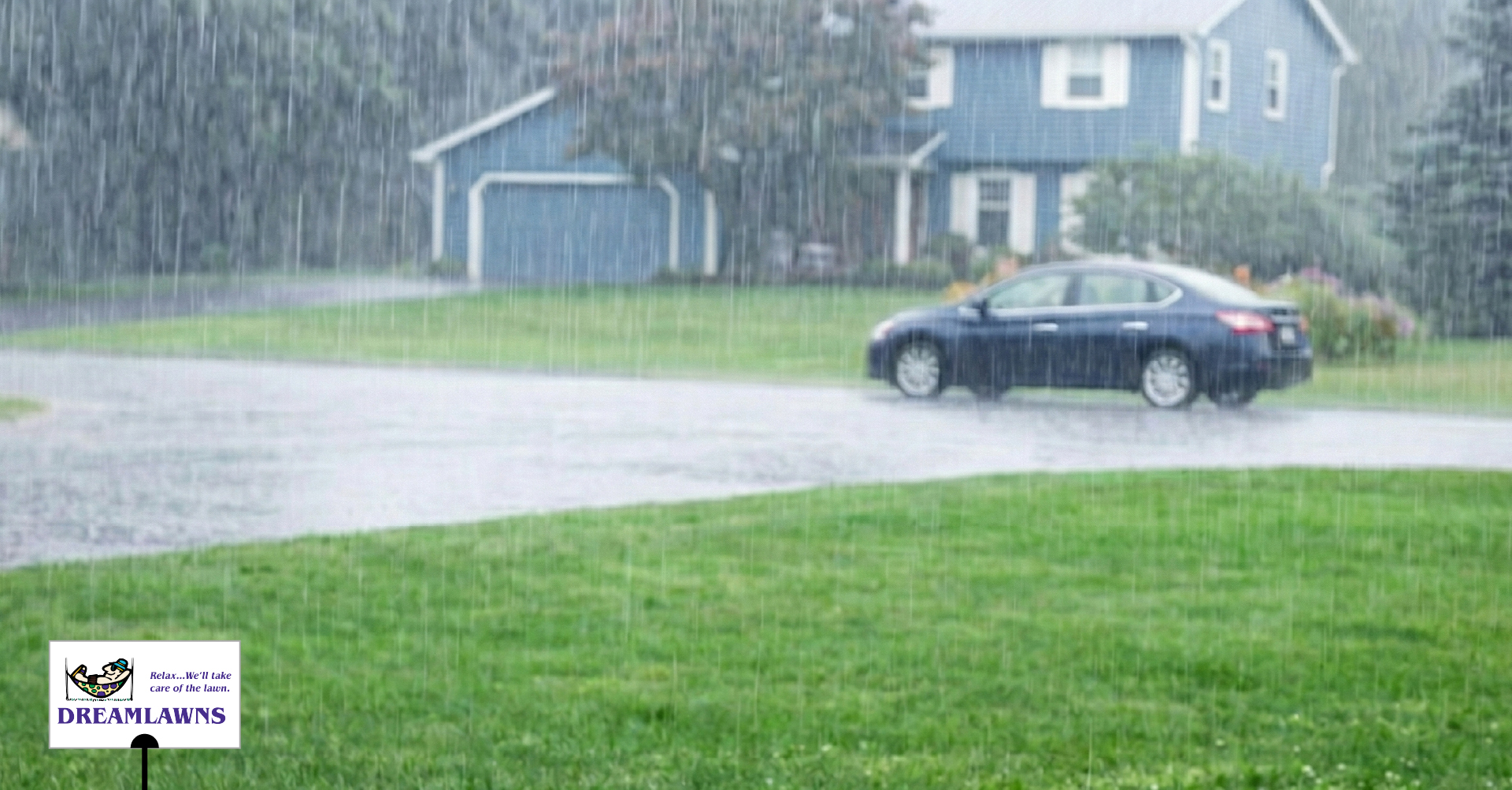
Dreamlawns Quick Cut: A wetter-than-normal winter in Virginia Beach can lead to lawn diseases, soil compaction, drainage issues, and aggressive winter weed growth. Strengthening your lawn in the fall, improving drainage, reducing winter stress, and following proper watering practices are key to preventing damage. Dreamlawns provides expert, tailored care to help your lawn stay healthy and resilient through a moisture-heavy winter.
When the Farmers’ Almanac predicts a wetter-than-average winter, homeowners in Virginia Beach should take notice. Our region already deals with high humidity, salt-influenced soils, and frequent temperature swings, so an unusually wet winter can create conditions that stress your lawn more than you might expect. Extended periods of rain and dampness can lead to fungal activity, soil compaction, weak root systems, and an early surge of winter weeds. Even healthy lawns can struggle when the ground stays saturated for long stretches of time.
Preparing your lawn before the worst of winter moisture arrives is the best way to keep it resilient. Strong roots, good drainage, balanced nutrients, and proactive care all play a major role in how well your lawn handles excessive rainfall. At Dreamlawns, we help Virginia Beach homeowners get ahead of seasonal challenges by providing services that support turf health through every type of winter, including those that bring above-normal precipitation.
What Is the Farmers’ Almanac and Why Do Homeowners Still Use It?
The Farmers’ Almanac is one of the longest-running weather and seasonal guides in the country, with a publishing history that dates back to 1818. Each annual edition includes long-range weather predictions, gardening calendars, astronomical charts, and practical home advice. While it is not a scientific forecast in the same way NOAA or local meteorologists operate, many homeowners still reference it because it provides early insights into seasonal patterns and potential weather trends.
The Almanac’s long-range forecasts are created using a proprietary formula that considers factors such as solar activity, historical weather cycles, ocean and atmospheric behavior, and other natural indicators. This method has remained largely unchanged for more than 200 years, contributing to its reputation as a traditional guide for farmers, gardeners, and homeowners who want to plan ahead.
For Virginia Beach residents, the Almanac’s outlook can be a helpful signal, especially when it points to an unusually wet or turbulent winter. Even if its predictions are not exact, knowing that a wetter season may be ahead encourages homeowners to prepare their lawns for increased moisture, heavier rainfall, and the higher risk of turf stress. By using the Almanac as an early planning tool, homeowners can take proactive steps that reduce the likelihood of winter damage and set their lawns up for a healthier spring.
What Does a Wet Winter Look Like in Coastal Virginia?
A wet winter in the Virginia Beach and Tidewater region does not always mean heavy snow or severe winter storms. More often, it means long stretches of saturated soil, repeated rainfall, and extended periods where the ground never fully dries out. Because our area experiences mild winters compared to other parts of the country, moisture tends to linger in the blades and soil profile rather than freezing solid for months at a time. The most common signs of a wetter-than-average winter include:
- Frequent Rainfall and Damp Soil: Rainstorms that arrive back-to-back can keep the surface of your lawn wet for days. When the soil stays saturated, oxygen cannot reach the roots, which can weaken the turf heading into spring.
- Freeze and Thaw Cycles: Virginia Beach lawns often experience a warm week followed by a sudden cold snap. When temperatures fluctuate rapidly, the soil expands and contracts. These freeze–thaw cycles strain the roots and make the lawn more susceptible to damage from foot traffic, equipment, and pooling water.
- Standing Water After Storms: Low spots, compacted areas, and places with poor drainage tend to show damage first. Even lawns with sandy soil can develop puddling after long periods of steady rain, especially if the ground is already saturated.
- Excess Humidity Trapped in the Turf: Moisture that sits on the surface of the grass encourages fungal diseases. Shade-heavy yards or areas where leaves were not removed early enough are especially vulnerable.
Together, these conditions stress both cool-season and warm-season turf. Understanding what a wet winter looks like in our region helps homeowners take proactive steps that protect their lawn from the side effects of excessive moisture.
How Excess Moisture Impacts Fescue Lawns vs. Warm-Season Turf
Not all grass types respond to winter moisture in the same way. In Virginia Beach, most homeowners have either tall fescue (cool-season turf) or warm-season grasses like Bermuda, or Zoysia. A wetter-than-usual winter affects each of these lawns differently, and understanding those differences helps you prepare more effectively.
How Excess Moisture Affects Fescue Lawns
Fescue is a cool-season grass, which means it remains active throughout winter. While growth slows, the turf is still functioning, absorbing nutrients, and maintaining its root system. Because it stays active, fescue is more directly impacted by prolonged moisture.
- Increased Disease Risk: Wet soil and lingering humidity create ideal conditions for winter fungal diseases. Fescue lawns are especially vulnerable to:
- red thread
- pink patch
- snow mold (in colder periods)
- root rot caused by consistently saturated soil
These diseases can weaken the turf and delay spring green-up.
- Compaction and Root Stress: When fescue experiences repeated rainfall, the soil becomes softer. Any foot traffic, pet activity, or equipment use on wet grass can compact the soil, restricting airflow and nutrient absorption. Compaction during the winter months often leads to patchy, thin areas once spring arrives.
- Nutrient Dilution: Heavy rainfall can wash away surface nutrients, especially nitrogen, leaving fescue underfed at a time when root health is most important.
How Excess Moisture Affects Warm-Season Turf
Warm-season grasses like Bermuda and Zoysia go dormant or semi-dormant in winter. Although they are not actively growing, their root systems are still very sensitive to prolonged moisture.
- Large Patch Risk: Warm-season lawns are highly susceptible to large patch, a fungal disease that thrives in cool, wet conditions. This disease starts in the fall and continues to spread through winter and early spring, often leaving large, circular areas of discolored turf.
- Weakened Roots Going Into Spring: During dormancy, warm-season grasses rely on stored energy. Waterlogged soil restricts oxygen movement into the root zone, which weakens the turf before spring growth returns.
- Pre-Emergent Breakdown: For warm-season lawns, fall pre-emergent is an important part of winter weed prevention. Heavy rainfall can dilute or disrupt the barrier that prevents weed seeds from germinating, allowing winter weeds like Poa annua to take hold.
Why These Differences Matter
Fescue lawns require active winter support, including proper fertilization and weed suppression. Warm-season lawns need a strong fall foundation to limit fungal outbreaks and protect roots before dormancy. In both cases, excessive moisture increases the need for proactive preparation.
How Homeowners Can Prepare Their Lawn for a Very Wet Winter
If the Farmers’ Almanac is right and we experience a wetter-than-normal winter, preparing your lawn now is the best way to prevent avoidable damage. Excess moisture can overwhelm turf quickly, but a few smart steps taken in late fall and early winter can significantly improve your lawn’s resilience. Here are the most effective ways to get ahead of heavy rainfall and saturated soil conditions.
Strengthen Your Lawn Before Winter Arrives
A lawn with a strong root system is far better equipped to handle prolonged moisture. Fall is the most important season for building that strength.
- Fall Fertilization: This is the foundation of winter lawn health. For fescue, about 70 percent of its annual nitrogen should be applied in September, October, and November. This supports root growth, improves nutrient storage, and prepares the grass to handle moisture and temperature fluctuations through winter.
- Aeration: Aeration reduces compaction and opens up the soil, allowing water to drain more efficiently. If your lawn was aerated this fall, the channels created will help prevent water from pooling on the surface during rainy periods.
- Overseeding Fescue: A dense fescue lawn handles moisture far better than a thin one. Overseeding fills in bare spots that would otherwise trap water or become vulnerable to winter weeds and disease.
Improve Drainage Before Peak Rainfall
Small drainage adjustments can prevent major problems once winter storms arrive.
- Identify Low Spots: Look for areas where water tends to linger after rain. Even minor depressions can turn into problem areas during a wet winter.
- Clear and Redirect Downspouts: Ensure your gutters are flowing freely and aim downspouts away from turf areas. Concentrated runoff is one of the fastest ways to saturate a lawn.
- Consider Soil Conditioning: Improving soil structure helps water absorb more effectively. Dreamlawns provides soil analysis and conditioning recommendations that can help manage drainage challenges specific to your property.
- Advanced Drainage Options: If you repeatedly struggle with standing water, long-term solutions like installing a French drain or regrading problem areas may be necessary.
Reduce Avoidable Winter Stress on the Lawn
Once the ground becomes saturated, the goal is to avoid creating additional damage.
- Minimize Foot Traffic: Walking on wet or frosted turf compacts soil and crushes grass blades. Try to avoid using the lawn during or after heavy rainfall.
- Keep Leaves Off the Lawn: Leaves trap moisture and limit airflow, creating a perfect environment for fungal activity. Regular removal or mulching is essential during a wet winter.
- Remove Excess Debris: Branches, lawn equipment, toys, and other clutter can create long-lasting wet spots underneath them. Keeping the surface clear helps the lawn dry out more efficiently.
Smart Winter Watering Practices
Even in a wet winter, there are specific scenarios where watering can still be necessary. The key is to water only when the lawn needs it.
- When to Water: Dry, windy winter weeks without rainfall can dehydrate the soil. If the grass or soil looks dry, a light watering during the warmest part of the day may be beneficial.
- When Not to Water: Avoid watering before a freeze, during extended rainy periods, or when the lawn is already saturated. Extra water during these times increases the risk of fungal activity and root stress.
Proactive preparation is the best defense against a wetter-than-normal winter. By strengthening your turf, improving drainage, and reducing unnecessary stress, you can help your lawn stay healthy through the cold, damp months ahead.
Work With Us
A wetter winter can create conditions that stress even the healthiest lawns. Excess moisture increases the risk of fungal diseases, weakens root systems, encourages winter weeds, and exposes problem areas like poor drainage or soil compaction. The best way to protect your lawn from these challenges is to prepare early and rely on a year-round plan that supports turf health through every season.
At Dreamlawns, we understand how unpredictable winters can be in Virginia Beach. Our team builds every program around the weather patterns, soil types, and turf varieties specific to our region. When the Farmers’ Almanac calls for above-average rainfall, we focus on strengthening the lawn before winter sets in and minimizing the risks that come with prolonged moisture.
Whether you have cool-season fescue that remains active during winter or warm-season turf heading into dormancy, we tailor our recommendations to what your lawn needs most. This includes fall fertilization to build strong roots, weed suppression to limit winter growth, and guidance on how to reduce stress from foot traffic, drainage issues, and freeze–thaw cycles. Our team also offers customized assessments if you have areas of your yard prone to pooling or slow drying after storms.
By partnering with Dreamlawns, you gain more than seasonal treatments. You get a knowledgeable team committed to the long-term health of your lawn. With proper preparation and consistent care, your turf can stay healthy through a wet winter and bounce back strong in the spring.
If you want expert support preparing your lawn for a potentially very wet winter, contact us today. We’re here to help your lawn stay resilient, no matter what the season brings.
Frequently Asked Questions
Yes. Prolonged moisture can weaken roots, encourage fungal diseases, compact the soil, and increase winter weed growth. Lawns with poor drainage or areas that stay soggy after storms are especially vulnerable.
Yes. Fall fertilization strengthens the root system and helps the lawn store nutrients before winter. Strong roots are better equipped to handle saturated soil and winter stress.
Absolutely. Even though they go dormant, warm-season grasses are still prone to moisture-related issues like large patch and winter weeds. Fall pre-emergents and fungicides help protect dormant turf.
The Farmers’ Almanac is an annual publication that provides long-range weather predictions, gardening guidance, astronomical data, and seasonal tips. It has been published every year since 1818 and is widely used by homeowners, gardeners, and farmers.
Lawn Care Services In The Virginia Beach Area
Dreamlawns provides superior lawn care service to Virginia Beach & Chesapeake VA residents.

